
This boot-shaped nation, which lies in Southern Europe, is one of the most sought-after tourist destinations in the world, full of breathtaking scenery, cutting-edge fashion, passionate locals, and delicious food. Italy undoubtedly improves a traveler’s experience due to its stunning exterior as well as its gentle charm and harmonious blend of really outstanding civilizations.
Rome
Rome is known as the “Eternal City” and is home to several cathedrals and historical treasures, as well as the Pantheno, the Roman Forum, and the Colosseum. The immense works of art in Rome with their ageless architecture will especially delight art enthusiasts. Also, be sure you savor the cuisine of this nation by treating yourself to a mouthwatering bowl of pasta and some of the nation’s most renowned gelato.
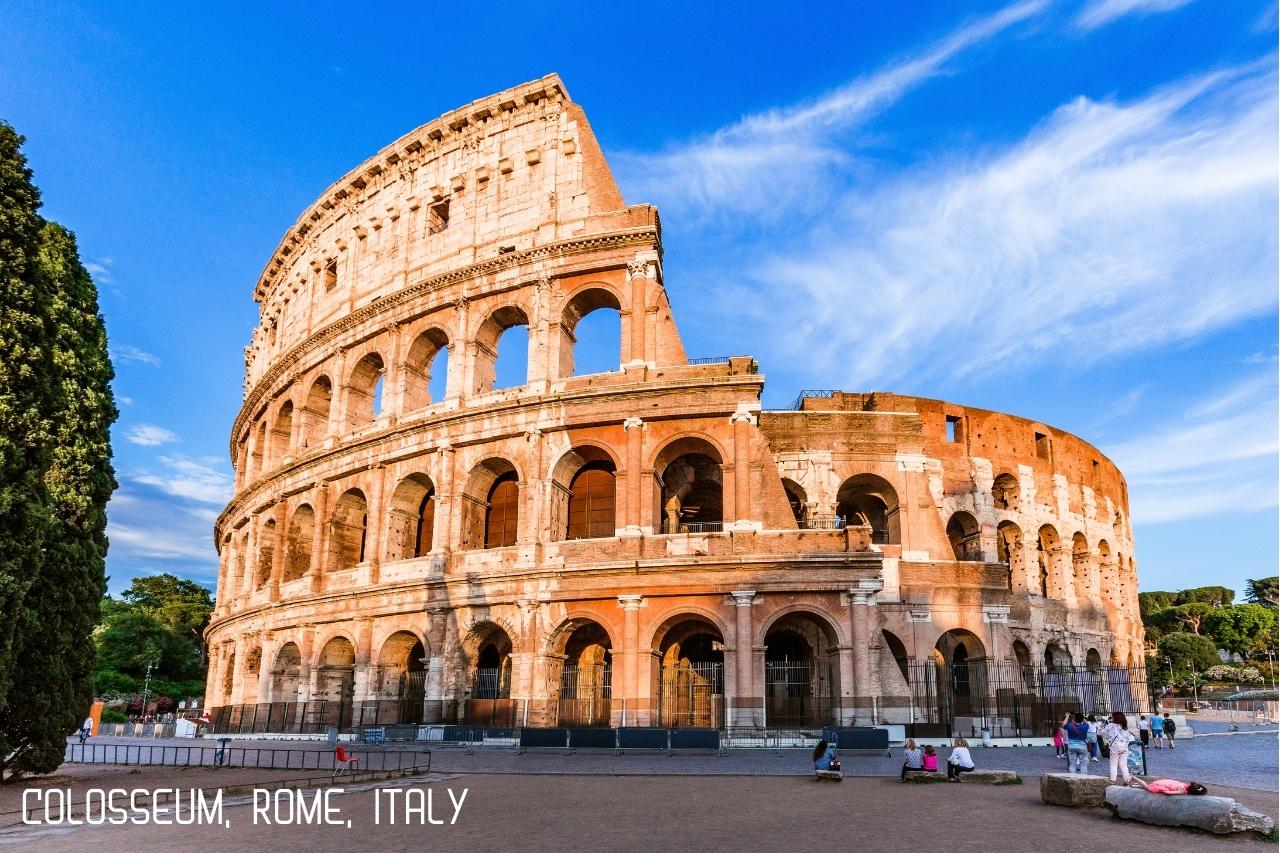
Colosseum
- Address: Piazza del Colosseo, 1, 00184 Roma RM, Italy
- Opening hours: 08:30 – 16:30
- Colosseum Entrance fee: €18
Built as a gift to the Roman populace during the Flavian emperors’ rule, the Colosseum (also known as the Flavian Amphitheater) is a sizable amphitheater in Rome. Under Emperor Vespasian, the Colosseum’s construction got underway in the years 70–72 CE. This enormous edifice has 80 amphitheater entrances, is four floors high, and measures around 189 by 156 meters.
Particularly, with a maximum capacity of 50,000 spectators, 76 entrances are for customers, 02 are for event participants, and 02 are designated for the emperor. This was the site of the emperor’s gladiator matches, theatrical performances, and even public executions prior to the collapse of the Roman Empire. After being neglected for a long time, the Colosseum has been renovated and is now one of Rome’s most visited tourist destinations.
Pantheon
- Address: Piazza della Rotonda, 00186 Roma RM, Italy
- Opening hours: 09:00 – 18:30
- Pantheon Entrance fee as follows
| Type of ticket | Category | Fee (€) |
| Audio tour of the Pantheon | Child up to 17 years old | 10 |
| Adult | 15 | |
| Audio tour of the Pantheon + Printed guide | 19.5 | |
| Guided tour of the Pantheon | Child up to 17 years old | 15.5 |
| Adult | 25.5 |
The Pantheon, perhaps one of Italy’s best-preserved ancient buildings, is home to the famed tombs of Renaissance painter Raphael in addition to the Italian monarchy’s tombs from 1870 to 1946. Constructed in AD 125, under Hadrian’s rule, this enormous structure is the most convincing illustration of the remarkable creative brilliance of Soufflon, a driven Roman builder.
The Patheon is composed of a circular center building that is more Roman in design and typical of the architecture of the major Roman baths, and a portico that is more Greek. Even after 2,000 years of weather-related living, the structure manages to maintain its lovely appearance. This gives guests a once-in-a-lifetime chance to go back in time and take in the breathtaking splendor of the Roman Empire!
Trevi Fountain
- Address: Piazza di Trevi, 00187 Roma RM, Italy
- Opening hours: All day
- Entrance fee: Free
Situated in Piazza di Trevi, the Trevi Fountain is arguably the most well-known fountain globally. Originally created by Bernini for Pope Clemens XII, the baroque structure wasn’t constructed until 1732, half a century later, by architect Nicola Salvi.
When it starred in films like La Dolce Vita, Angels and Demons, Lizzie McGuire, and Roman Holiday, this thirty-meter-tall fountain rose to fame. A statue depicting the nautical deity Neptune being drawn out to sea on his shell-shaped chariot, carried by two winged horses and tritons (youth gods of the sea), is built against the rear of the Palazzo Poli and is located under the arch.
The two horses’ contrasting expressions—one boisterous and the other calm—imply how the tide shifts with each rise and fall. Two other sculptures representing health and abundance are located in the side niches. These days, visitors to Rome frequently toss a coin into the river that corresponds to the number of tosses; this custom has a very intriguing significance.
Piazza Navona
- Address: Piazza Navona, Roma RM, Italy
- Opening hours: All day
- Entrance fee: Free
You emerge from the shadows of the historic center’s old, meandering lanes into the majestic grandeur of Piazza Navona, the site of amazing outdoor performances. The square, which is now Rome’s most valuable plaza, is among the most exquisite examples of Baroque architecture in papal Rome.
Its remarkable beauty is derived from the harmonious use of colors and luxury, as well as the unexpected contrast of architecturally stunning homes dotted with some imposing structures. Coming here, tourists will see lively street art performances in a rhythmic, colorful environment.
Roman Forum
- Address: Via della Salara Vecchia, 5/6, 00186 Roma RM, Italy
- Opening hours: 09:00 – 16:30
- Entrance fee: €18
The lowlands between the Palatine and Capitoline hills were home to the Roman Forum, which was the most significant building location in ancient Rome. It developed into a hub for religious rites and festivities under the empire and the location of many of the most magnificent temples and monuments in the city.
The Temples of Castor and Pollux, the Temple of Caesar, the Mamertine Prison, the Curia, the Temple of Saturn, the Temple of Vesta, the Temple of Romulus, the Arch of Titus, the Arch of Septimius Severus, and Cloaca Maxima are among the ruins that still stand as a powerful reminder of a glorious and valiant time in Roman history.
Castel Sant’ Angelo
- Address: Lungotevere Castello, 50, 00193 Roma RM, Italy
- Opening hours: 09:00 – 19:30 (except Monday)
- Entrance fee: €13
Castel Sant’Angelo, also called Hadrian’s Tomb, is a stronghold a short distance from Vatican City on the right bank of the Tiber River. Emperor Hadrian oversaw the building’s construction and started it in 135 with the intention of using it as a tomb for himself and his family. But once it was finished in 139, it was used as a military structure, and under Pope Clement VII, it was transformed into a defensive stronghold in 1527.
The ashes chamber, which is separated into five storeys, allows visitors to see each historical figure’s jail cell individually via a spiral stairway. The Pope’s palace, adorned with Renaissance paintings and a priceless collection of weaponry, is located in the castle’s upper floor. Additionally, don’t pass up the opportunity to take in the breathtaking city views from the rooftop terrace of the castle, which is guaranteed to wow every visitor
St. Peter’s Basilica
- Address: Piazza San Pietro, 00120 Città del Vaticano, Italy
- Opening hours: 07:00 – 19:00
- Entrance fee: Free
Any trip to the Vatican must include a visit to St. Peter’s Basilica. Vatican City is dominated by the massive St. Peter’s Basilica (Basilica di San Pietro), whose dome is visible from all over Rome. Constructed on the spot where St. Peter was crucified and laid to rest, it serves as the focal point of the Catholic Church and is the last resting place of several popes, including Pope John Paul II. The biggest church in Italy, the ornate basilica is also a museum housing invaluable pieces of art, such as Bernini’s bronze baldachin and Michelangelo’s magnificent Pietà.
Spanish Steps
- Address: Piazza di Spagna, 00187 Roma RM, Italy
- Opening hours: All day
- Entrance fee: Free
One of the most visited tourist destinations in Rome is the imposing Spanish Steps, which were created by Francesco de Sanctis. The Spanish Steps climb from Piazza di Spagna to the Trinità dei Monti church and have been featured in innumerable postcards and motion pictures. Constructed between 1723 and 1725, the 138-step stairway is among the broadest in Europe and functions as a bustling hub for both inhabitants and tourists.
Vatican Museum & Sistine Chapel
- Address: Vatican City
- Opening hours: 09:00 – 16:00 (except Sunday)
- Vatican Museums Entrance fee as follows
| Type of ticket | Category | Fee (€) |
| Full Entry Ticket | Child 07-18 years old | 8 |
| Adult | 20 | |
| Papal Palace and Secret Garden of Castel Gandolfo | Child 07-18 years old | 5 |
| Adult | 12 | |
| Full Entry Ticket “Skip the Line” | Child 07-18 years old | 13 |
| Adult | 25 |
The Vatican Museums, also known as “I Museu Vaticani,” are among the biggest museums in the world. They include an immense collection that includes modern art as well as religious artifacts, exquisitely painted chambers, and artifacts from ancient Rome and Egypt. The Vatican’s 26 museums are located in a network of many Apostolic palaces and are, in large part, the most visited museums in Rome, thanks in part to the well-known Sistine Chapel.
Renowned for its ceiling frescoes, the Vatican Museums in Rome include the Sistine Chapel (Cappella Sistina), one of its most well-known sections. The Last Judgment is housed in the chapel, which has been decorated by great painters including Sandro Botticelli, Michelangelo, and Pinturicchio.
Venice
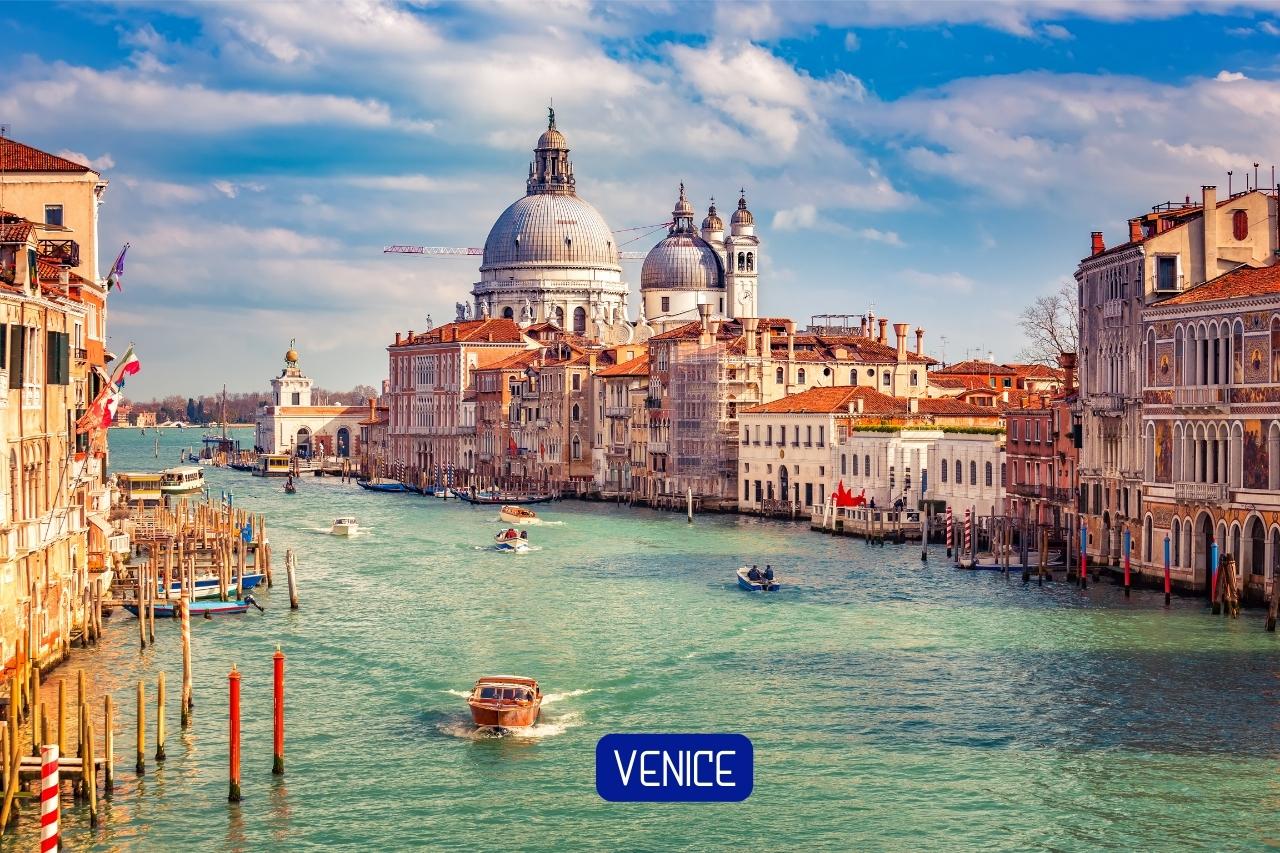
A city known for its world-renowned art events and natural romantic beauty that has long made it a popular destination for couples. Venice is unlike any other city because of its gorgeous Gothic architecture, meandering cobblestone lanes, and leisurely drifting boats. It would be hard to overlook the abundance of museums, expansive galleries, and amazing historical sites that are likewise highly sought-after by Italian visitors.
Piazza San Marco
- Address: P.za San Marco, 30100 Venezia VE, Italy
- Opening hours: All day
- Entrance fee: Free
One of the most exquisite squares in the world, San Marco Square is situated in the heart of Venice and dates back to the 12th century. Beautiful neighboring galleries may be seen when strolling around the area. At the other end of the plaza are Saint Mark’s Basilica, the Bell Tower, and a portion of the Doge’s Palace roof. Nothing is more delightful than strolling in the soft yellow light of the setting sun, savoring a steaming cup of coffee from one of the restaurants lining either side of the street, and observing the adorable tiny pigeons perched on the plaza.
Rialto Bridge
- Address: Sestiere San Polo, 30125 Venezia VE, Italy
- Opening hours: All day
- Entrance fee: Free
Being the oldest of the four bridges in Venice that cross the Grand Canal, Rialto draws a lot of visitors because of its distinctive design as well as its fascinating history. Antonio da Ponte constructed the stone bridge of today between 1588 and 1591 to replace the timber one that had twice fallen and partially burnt in 1310. In addition to drawing tourists from all over the globe, this location has developed into a never-ending source of inspiration for photographers working in the Venetian sky under the day, or under the flashing lights at night.
Basilica di San Marco
- Address: P.za San Marco, 328, 30100 Venezia VE, Italy
- Opening hours
| Area | Opening hours |
| St Mark Basilica | 09:30 – 17:15 |
| Museum – Loggia dei Cavalli | 09:30 – 14:00 (Sunday) |
| Bell Tower | 09:30 – 21:15 |
Basilica of San Marco Entrance fee as follows
| Type of ticket | Category | Fee (€) |
| St Mark Basilica | Child up to 06 years old | Free |
| Adult | 3 | |
| Pala d’Oro | Child up to 06 years old | Free |
| Adult | 5 | |
| Museum – Loggia dei Cavalli | Child up to 06 years old | Free |
| Adult | 7 | |
| Bell Tower | Child up to 06 years old | Free |
| Adult | 10 |
The initial purpose of the Basilica of San Marco, built in 829, was to commemorate and preserve Saint Mark’s bones that had been transported from Alexandria. Later on, Saint Mark took the position of Saint Theodore as Venice’s patron saint, and the winged lion emblem he created later served as the official emblem of the Venetian Republic.
As one enters the cathedral, their value increases due to the Gothic sculpture masterpieces by Jacobello and Pier Paolo dalle Masegne, as well as the mosaic embellishments on a golden backdrop composed of various types of glittering marble. When guests have the chance to visit Venice, let’s tour, discover the inside of each region to provide them a varied cultural experience.
Doge’s Palace
- Address: P.za San Marco, 1, 30124 Venezia VE, Italy
- Opening hours: 09:00 – 18:00
- Entrance fee as follows
| Category | Fee (€) |
| Child under 06 years old | Free |
| Child 06-14 years old/ Student 15-25 years old/ Senior over 65 years old | 15 |
| Adult | 30 |
One of the most well-known structures in Venice, the Doge’s Palace is situated on the expansive Piazza San Marco Plaza and is not to be missed. Remarkable for its distinct architectural design, with a magnificent facade adorned in the Gothic style, featuring two-story tiled balconies with patterned tiles.
The inside features large staircases, gilded ceilings, and exquisitely painted frescoes on the walls. The Doge’s Palace housed the Republic’s prisons, which could be reached by the Bridge of Sighs, in addition to serving as the residence of the Doge, the ruler of Venice, and a meeting spot for officials and dignitaries from around the city. A tour of the palace will not only reveal its breathtaking beauty but also provide you with an opportunity to learn about the history of the emperors and their opulent lifestyle.
Bridge of Sighs
- Address: P.za San Marco, 1, 30124 Venezia VE, Italy
- Opening hours: 08:30 – 19:00 (April – October) | 08:30 – 17:30 (November – March)
- Entrance fee: Free
One of the most photographed locations in Venice is the Bridge of Sighs. Antonio Contino, the nephew of the architect who constructed the Rialto Bridge, made the elaborate stonework design for it in 1603. The building’s name comes from a legend that says prisoners who crossed the covered bridge from their detention to their cell would cry out in sorrow as they saw their last view of Venice through the barred windows.
Peggy Guggenheim Collection
- Address: Dorsoduro, 701-704, 30123 Venezia VE, Italy
- Opening hours: 10:00 – 18:00 (except Tuesday)
- Entrance fee as follows
| Category | Fee (€) |
| Child under 10 years old | Free |
| Student under 26 years old | 9 |
| Adult | 16 |
| Senior over 65 years old | 14 |
You can already see the Peggy Guggenheim Museum from the Grand Canal. A visit to the sculpture garden and the contemporary art collection behind the museum is highly recommended. The majority of the art is from Europe and America. Additionally, this museum exudes a calmness that may occasionally be a pleasant surprise in a hectic city like Venice.
Milan
The capital of Lombardy, the second most populous city in Italy, is Milan, which is situated in the country’s north and is a stunning blend of old and new. Milan is not only the European center of fashion and art, but it is also a fantastic place to visit, replete with magnificent Gothic architecture and rich in creative and historical legacy. Milan is a contemporary, energetic city today, known for its amazing skyline, superb architecture, and cutting-edge fashion.
Arco della Pace
- Address: Piazza Sempione, 20154 Milano MI, Italy
- Opening hours: All day
- Entrance fee: Free
The majestic triumphal arch known as the Arco della Pace, or the Arch of Peace, is situated in Milan, Italy. It is a symbol of victory and peace and one of the most recognizable monuments in the city. It is a triumphal arch in the Neoclassical style, modeled after Rome’s Arch of Constantine. The main material of the arch is marble, and it has two lesser arches flanking the principal entrance, each with elaborate reliefs and sculptures.
The arch’s main facade, which faces south, is decorated with bas-reliefs and allegorical figures that stand for numerous military victories and peace. The goddess of peace is shown in a bronze figure atop the arch, riding a chariot pulled by six horses. The arch’s majesty is enhanced by the many sculptures and friezes that adorn its sides.
Milan Duomo
- Address: P.za del Duomo, 20122 Milano MI, Italy
- Opening hours: 09:00 – 19:00
- Entrance fee as follows
| Category | Fee (€) |
| Child under 06 years old | Free |
| Child 06-18 years old | 4.5 |
| Adult | 8.5 |
| Family 02 adults + 01 child | 21.5 |
| Family 02 adults + 02 children | 25.5 |
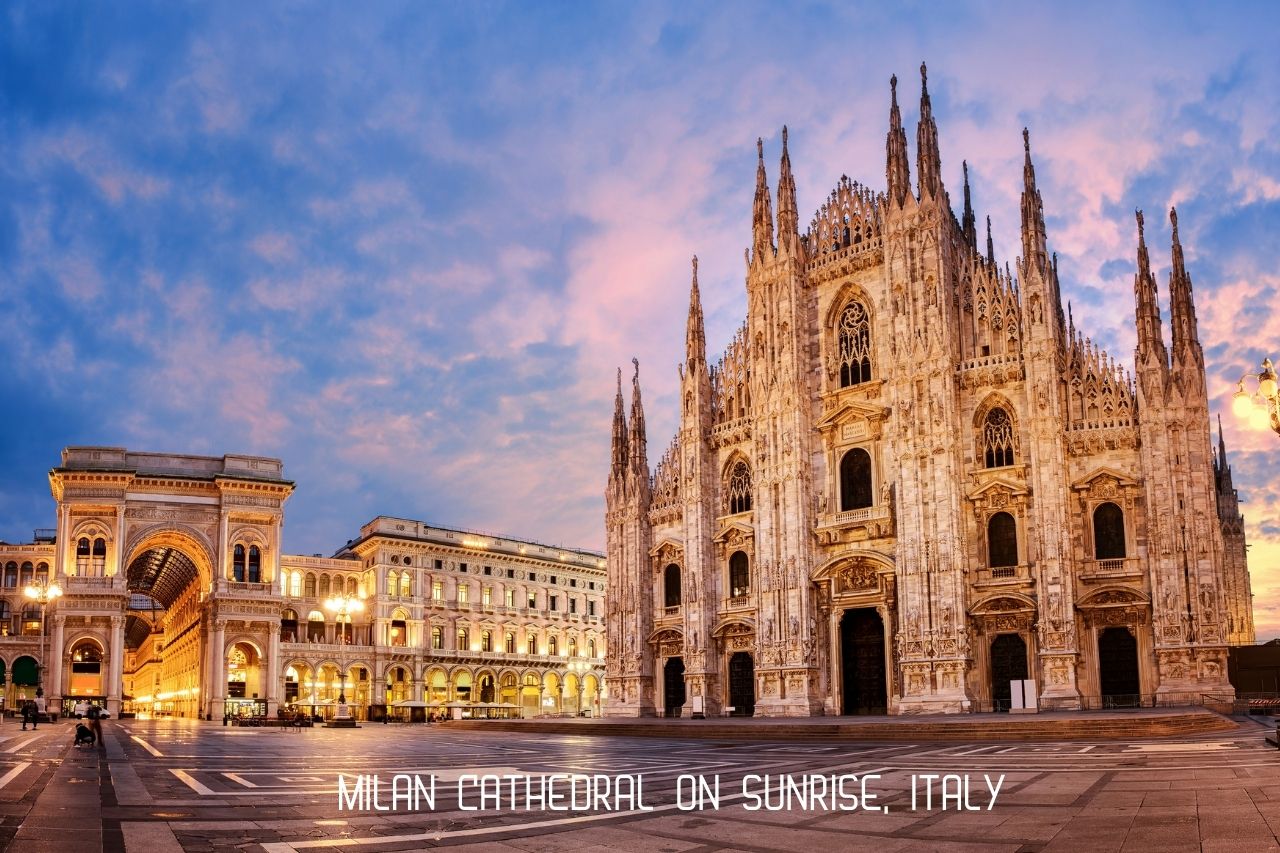
Situated in the center of Milan, the Duomo di Milano is a spacious church designed in the Gothic style. It took more than 500 years to finish the initial concept for a Gothic church with a cruciform nave and transept in Milan, which was commissioned by Archbishop Antonio da Saluzzo in 1386 on an old Roman site. It follows that the building’s remarkable architecture—a fusion of Lombard Roman and worldwide Gothic styles—is not surprising.
There are several pinnacles, flying buttresses, and beautifully patterned windows in the French Gothic eastern arcade; an octagonal Renaissance dome; a 17th-century gateway; an 18th-century tower; and a neoclassical facade. Large murals depicting biblical events and ceiling-high marble columns embellish the tasteful. The most valuable item on exhibit here is the nail that was used during Jesus Christ crucifixion; it is only shown to the public once a year, on the Saturday that falls closest to September 14.
Sforza Castle
- Address: Piazza Castello, 20121 Milano MI, Italy
- Opening hours: 07:00 – 19:30
- Entrance fee: Free
Sforzesco, which is a part of one of the biggest castles in Europe, was formerly a military barracks, a ducal house, and a defensive bastion before gaining popularity as a tourist destination. Visitors may ride on the battlements and explore the expansive park after exploring and admiring the enormous courtyards, walls, moat, and towers.
Constructed in the fifteenth century by Francesco Sforza, the castle currently houses an extensive collection of fine artworks. The Picture Library, the Museum of Musical Instruments, and the Museum of Ancient Art are among the treasures held by Castello Sforzesco. Italian Renaissance and 17th-century masters such as Andrea Mantegna, Giovanni Bellini, Filippo Lippi, Correggio, and Jacopo da Pontormo are represented in the painting gallery.
Sempione Park
- Address: Piazza Sempione, 20154 Milano MI, Italy
- Opening hours: 06:30 – 21:00
- Entrance fee: Free
Large, vibrant urban park with lots of green space in the center of Milan, Parco Sempione is situated just behind Sforza Castle (Castello Sforzesco) and next to the hip Brera neighborhood. The park’s grounds, which span more than 47 hectares, are beautifully landscaped with verdant grass, vibrant flower bushes, and an artificial lake. One of Milan’s best locations for a lovely, leisurely stroll and bike ride in a romantic atmosphere is Sempione Park.
Pinacoteca di Brera
- Address: Via Brera, 28, 20121 Milano MI, Italy
- Opening hours: 08:30 – 18:00 (except Monday)
- Entrance fee as follows
| Category | Fee (€) |
| Child under 18 years old | Free |
| Adult | 15 |
| Family max. 02 adults + 05 children | 10 |
| Audio guide | 5 |
One of the most respected museums in the world, the Pinacoteca di Brera was established as the national museum of the Kingdom of Italy with the goal of honoring Napoleon Bonaparte. Originally established in 1809, the year Milan was designated as the capital of the Kingdom of Italy, Pinacoteca is home to almost 400 pieces of art, mostly by Italian painters, arranged over 38 rooms that span the fourteenth through the twentieth century.
Among the 17th-century paintings are masterworks of religious art, such as the well-known still life by Baschenis or the Madonna del Carmelo by Tiepolo. Romantic portraits by Hayez, collections by Morandi, Carrà, Sirroni, De Pisis, and several more well-known artists are among the other notable pieces housed in the museum.
Teatro alla Scala
- Address: Via Filodrammatici, 2, 20121 Milano MI, Italy
- Opening hours: 09:30 – 17:30
- Entrance fee as follows
| Category | Fee (€) |
| Child up to 12 years old | Free |
| Student from 13 years old/ Senior from 65 years old | 8 |
| Adult | 12 |
| Family 02 adults + 02 children up to 05 years old | |
| Family 02 adults + 02 children 06-14 years old | 25 |
Regardless of your level of interest in ballet or opera, La Scala is a striking sight. The building’s facade may not be as impressive as Milan’s Duomo, which is only a short distance away, but every music fan must see its lavish interior. One of the most visited sights in Milan is La Scala, along with the Duomo and Leonardo da Vinci’s The Last Supper. A visit to the La Scala Museum, which has an archive, musical instruments, actor and musician portraits, and a collection of costumes and set designs, is also included in these theatrical trips. Nothing compares to seeing a performance of an opera, ballet, or concert at La Scala, which has well-known pieces by Verdi, Puccini, and Rossini.
Leonardo da Vinci Museum of Science and Technology
- Address: Via San Vittore, 21, 20123 Milano MI, Italy
- Opening hours: 09:30 – 17:00 (Tuesday – Friday) | 09:30 – 18:30 (Saturday – Sunday)
- Entrance fee as follows
| Category | Fee (€) |
| Child under 03 years old | Free |
| Child & Youth 03-26 years old/ Senior from 65 years old | 7.5 |
| Adult | 10 |
| Guided tour 55 mins | 90 |
| Guided tour 110 mins | 150 |
Founded in 1953, the Museo nazionale della Scienza e della Tecnologia “Leonardo da Vinci” aims to showcase the key components that have influenced scientific and technological advancements and fueled their historical progression.
The vast collection of the museum is spread over many buildings and organized into sections such as astronomy, physics, optics, acoustics, timekeeping, press, film, photography, telephone, and television, as well as metallurgy, casting and transportation. The first Italian locomotive, together with a massive boat and submarine, are located in the transport sector.
Leonardo da Vinci, the man who ruled the fine arts, science, and technology, is honored in one of the museum’s most unique sections. Visitors may view wooden replicas of a variety of the brilliant man’s creations in the exhibit devoted to him.
Florence
For people who enjoy history and culture, Florence, Italy, is a fantastic outdoor museum. It is home to several intriguing museums, squares, cathedrals, sculptures, and Renaissance artwork. Florence, one of the most popular travel locations in Italy, offers unique experiences whether taking in the sunset over Ponte Vecchio, perusing exquisite Renaissance artwork, or indulging in delectable cuisine.
Piazza del Duomo
- Address: Piazza del Duomo, 50122 Firenze FI, Italy
- Opening hours: All day
- Entrance fee: Free
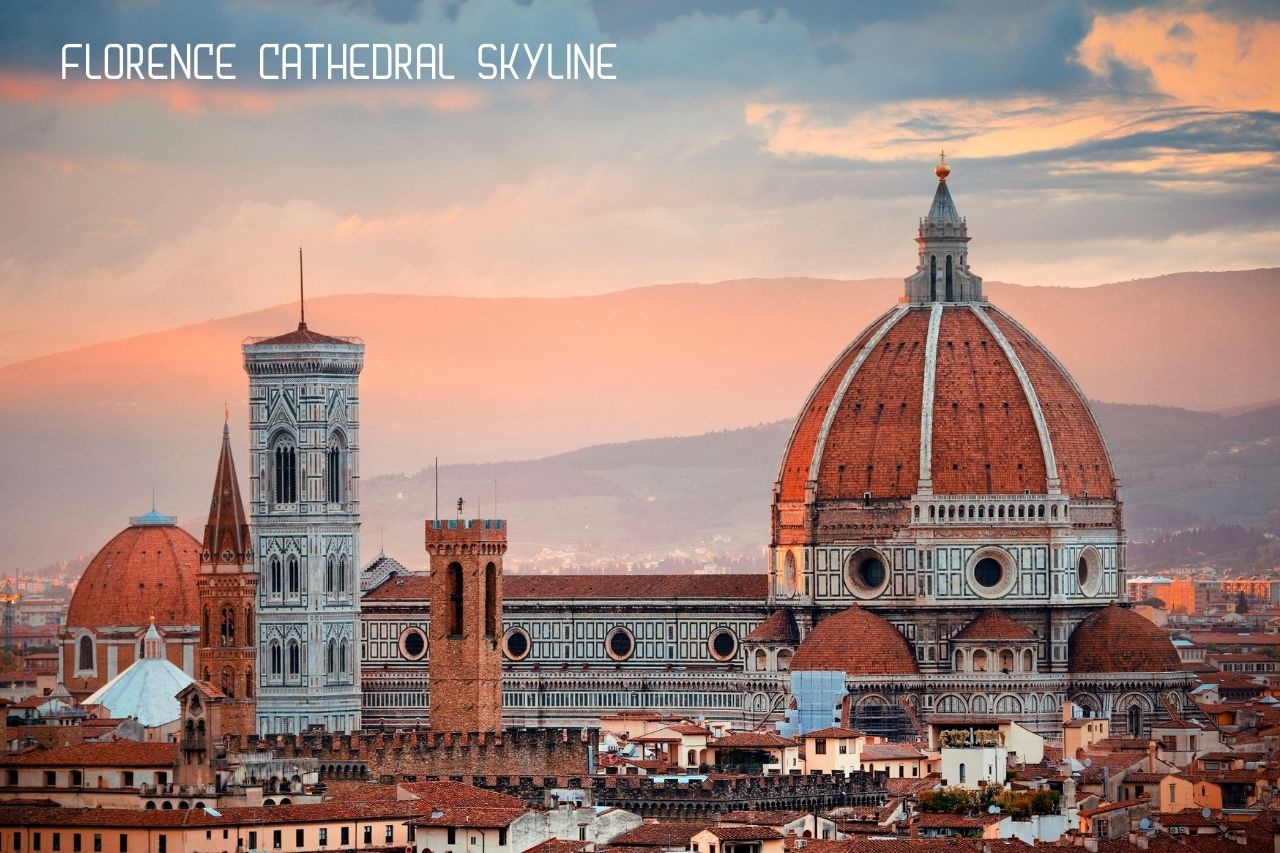
The heart of Florence’s historic district and its spiritual hub is Piazza del Duomo, which is home to the UNESCO World Heritage Site and where you may take in the alluring architecture of the surrounding structures. The city’s cathedral, the Campanile di Giotto, and the Battistero di San Giovanni, which together with the Ponte Vecchio are Florence’s most recognizable features, are located in the plaza. Don’t forget to take advantage of the chance to see the museum, which is situated on the east side of the plaza and has a wealth of fascinating artwork that may provide tourists a better understanding of Florence.
Piazzale Michelangelo
- Address: Piazzale Michelangelo, 50125 Firenze FI, Italy
- Opening hours: All day
- Entrance fee: Free
Giuseppe Poggi created the Piazzale Michelangelo in 1860, and it is crammed with duplicates of the artist’s sculptures, one of which is a second copy of David (the original is at the Accademia Gallery). Because of its hilltop location, the Piazza offers stunning views of Florence and the surrounding countryside in all directions. Enjoy the view over the Florentine cityscape and the Tuscan hills while snapping pictures of the Arno’s meandering path, the Ponte Vecchio, the Palazzo Vecchio, the Uffizi Gallery, the Santa Croce church, and the Duomo.
Piazza della Signoria
- Address: P.za della Signoria, 50122 Firenze FI, Italy
- Opening hours: All day
- Entrance fee: Free
Florence’s central plaza is called Piazza della Signoria, or Signoria plaza. It is situated between the Arno River and Piazza del Duomo. The plaza included hot baths under the Roman Empire, but they were abandoned at the start of the Middle Ages, and craftspeople began to progressively occupy the area.
The existing layout of Piazza della Signoria is a holdover from the thirteenth century. Since it was paved at the close of the thirteenth century, Florence has regarded it as its political and municipal center. Not only is the Piazza della Signoria the most beautiful plaza in Florence, but it’s also the liveliest. Locals and visitors gather here year-round, but particularly on the warmest evenings, to enjoy the performances of street artists who utilize this space as their own makeshift stage.
Accademia Gallery
- Address: Via Ricasoli, 58/60, 50129 Firenze FI, Italy
- Opening hours: 08:15 – 18:20 (except Monday)
- Accademia Gallery Entrance fee: €16
The Accademia Gallery has a sizable collection of artwork from the thirteenth through sixteenth centuries. One of its primary draws is the famous “David” sculpture, a Michelangelo masterwork. The gallery is a popular destination for tourists in Florence, drawing millions of visitors annually. A guided tour is the best way to fully understand the wealth of history contained inside the gallery’s walls.
A knowledgeable tour guide will share information and anecdotes about each masterpiece and the artist who created it. Enjoy a holistic experience when you visit the gallery and examine some of the most notable pieces of art that helped to shape creative advancements in the years that followed.
Ponte Vecchio
- Address: Ponte Vecchio, 50125 Firenze FI, Italy
- Opening hours: All day
- Entrance fee: Free
Because of the tales, fires, floods, and conflicts that have surrounded Ponte Vecchio throughout its history, the bridge has come to symbolize Florence. Taddeo Gaddi, a pupil of Giotto, created the bridge, which was finished in 1345. Visitors will be ecstatic to see that the two sides of this bridge are gorgeous jewelry stores, in contrast to other bridges that are utilized for vehicular traffic. Visitors fall even more in love with this lovely city when they stroll slowly and deliberately to take in the lyrical surroundings.
Santa Maria del Fiore
- Address: Piazza del Duomo, 50122 Firenze FI, Italy
- Opening hours
| Area | Opening hours |
| Cathedral | 10:15 – 15:45 (Monday – Saturday) |
| Baptistery | 08:30 – 19:30 |
| Museum | 08:30 – 19:00 |
| Bell Tower | 08:15 – 18:45 |
| Dome | 08:15 – 18:45 (Monday – Friday) | 08:15 – 16:30 (Saturday) | 12:45 – 16:30 (Sunday) |
| Santa Reparata | 10:15 – 16:00 (Monday – Saturday) | 13:30 – 16:00 (Sunday) |
Santa Maria del Fiore Entrance fee as follows
| Type of ticket | Category | Fee (€) |
| Cathedral | All ages | Free |
| Dome – Guided tour | Child under 07 years old | Free |
| Child 07-14 years old | 30 | |
| Adult | 45 | |
| Baptistery’s Restoration Site – Guided tour | 65 | |
| Cathedral – Guided tour | Child under 07 years old | Free |
| Child 07-14 years old | 7 | |
| Adult | 15 | |
| Baptistery & Museum – Guided tour | Child under 07 years old | Free |
| Child 07-14 years old | 15 | |
| Adult | 25 | |
| The Two Treasures | Child 07-14 years old | 10 |
| Adult | 18 | |
| Ghiberti Pass: Museum, Baptistery, Santa Reparata | Child under 07 years old | Free |
| Child 07-14 years old | 5 | |
| Adult | 15 | |
| Giotto Pass: Bell Tower, Museum, Baptistery, Santa Reparata | Child under 07 years old | Free |
| Child 07-14 years old | 7 | |
| Adult | 20 | |
| Brunelleschi Pass | Child under 07 years old | Free |
| Child 07-14 years old | 12 | |
| Adult | 30 |
With its spectacular Renaissance dome constructed by Filippo Brunelleschi and the baptistery just opposite, Florence Cathedral stands tall in the city as one of the best examples of Gothic art and the early Italian Renaissance. Pink, white, and green marble are used as ornamental elements all over the outside of the church. Inside are sculptures and paintings with intricate carvings and enormous domes that exemplify the Gothic architectural style.
Uffizi Gallery
- Address: Piazzale degli Uffizi, 6, 50122 Firenze FI, Italy
- Opening hours: 08:15 – 18:30 (except Monday)
- Entrance fee: €12
The Uffizi Gallery, which is situated in the center of Florence, features well-known pieces created by renowned Italian painters including Leonardo da Vinci, Raffaello, Giotto, Cimabue, Michelangelo, and Botticelli. With so many rare and exquisite pieces of art, most dating back to the Renaissance, housed inside the museum, this is a must-visit location for any traveler to Florence.
Palazzo Vecchio
- Address: P.za della Signoria, 50122 Firenze FI, Italy
- Opening hours: 09:00 – 14:00
- Entrance fee as follows
| Category | Fee (€) |
| Child under 18 years old | Free |
| Adult 18-25 years old | 16 |
| Adult over 25 years old | 18.5 |
The Palazzo Vecchio served as the seat of Florence’s government for many years. The municipal council is still housed here to this day. Currently, nevertheless, the palace serves mostly as a museum. It is well-known for the Hall of Five Hundred, a sizable area with well-known frescoes. Vasari’s paintings on the cassette ceiling are particularly well-known. For a stunning perspective of the city, you may even go inside the clock tower.
Palermo
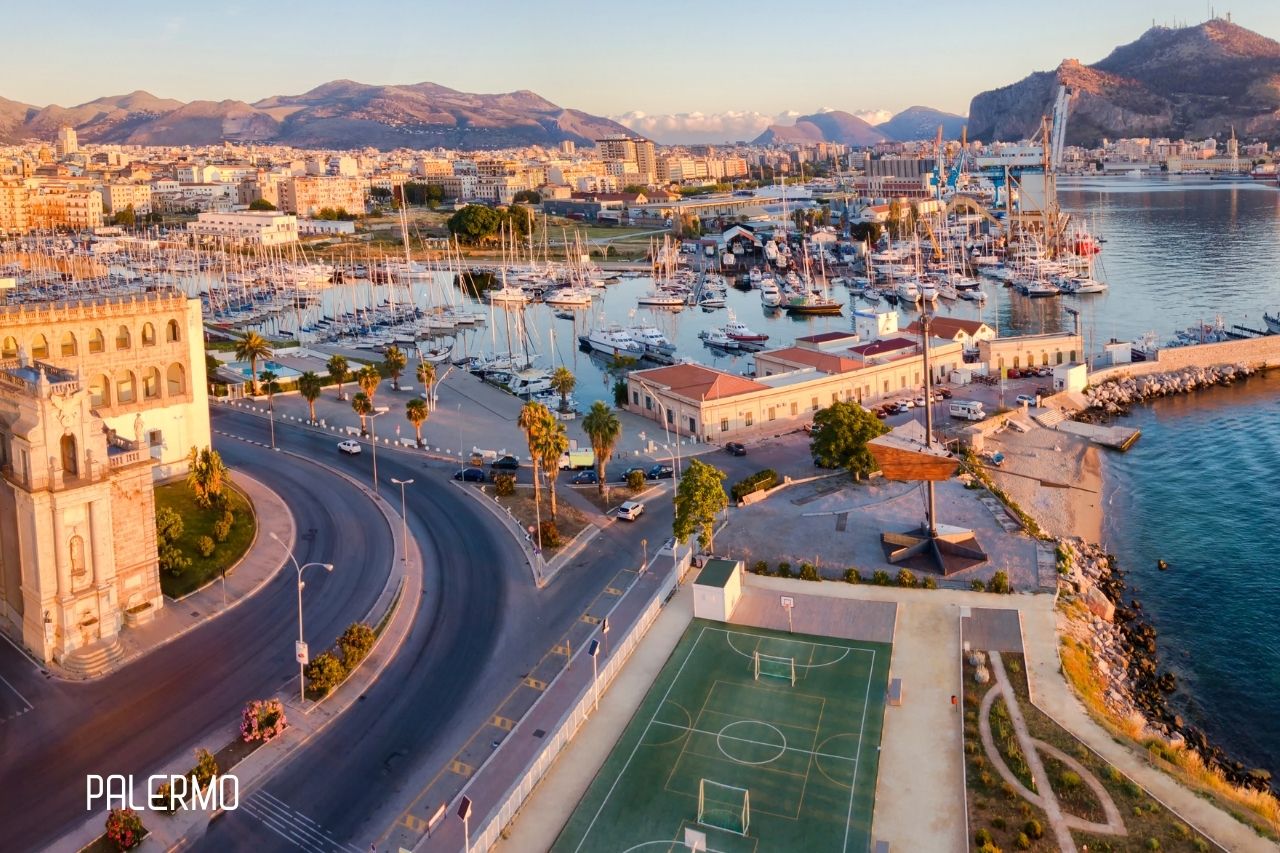
Palermo epitomizes Sicily – a captivating blend of civilizations that battled, converged, and finally united over millennia to produce a city that appears to be isolated from the Italian mainland. A magnificent fusion of street markets with Norman, Moorish, and Baroque architectural styles. The city takes great pleasure in the beautiful Byzantine mosaics found in the Cathedral and Imperial Palace. Visitors to Palermo may also savor delectable cuisine that combines distinctive regional flavors and leaves a lasting impact on everyone.
Norman Palace
- Address: Piazza del Parlamento, 1, 90129 Palermo PA, Italy
- Opening hours: 08:30 – 16:30 (Monday – Saturday) | 08:30 – 09:30 & 11:30 – 12:30 (Sunday)
- Entrance fee as follows
| Type of ticket | Category | Fee (€) |
| Palatine Chapel, Royal Apartments, Royal Gardens, Archaeological Area and Exhibition
(Friday, Saturday, Sunday and Monday) |
Child up to 13 years old | Free |
| Child 14-17 years old | 11 | |
| Youth 18-25 years old | 17 | |
| Adult | 19 | |
| Senior over 65 years old | 15.5 | |
| Audio Guide | 5 | |
| Palatine Chapel, Royal Gardens, Archaeological Area and Exhibition
(Tuesday, Wednesday and Thursday) |
Child up to 13 years old | Free |
| Child 14-17 years old | 9 | |
| Youth 18-25 years old | 13.5 | |
| Adult | 15.5 | |
| Senior over 65 years old | 13.5 | |
| Audio Guide | 5 | |
| “Thesaurus” exhibition and Punic walls | 8.5 | |
| Meta Experience | Child up to 13 years old | 2 |
| Adult | 3 |
One of the most amazing structures in Sicily is Palermo’s Palazzo Reale, also called Palazzo dei Normanni (Palace of the Normans), which spans the city’s history from its early origins. The palace has experienced several changes that are indicative of the various historical periods it has been a part of, owing to the intricate and varied history of the city. You will be particularly struck by the opulent Palatine Chapel, which is regarded as the best example of the Arabic-Norman-Byzantine style, while you admire the private mansions of the numerous Sicilian royal dynasties.
Palermo Cathedral
- Address: Via Vittorio Emanuele, 490, 90134 Palermo PA, Italy
- Opening hours: 07:00 – 19:00
- Entrance fee: Free
The Palermo Cathedral, one of Sicily’s most significant architectural landmarks, was constructed as a Christian church by the Normans in 1184. The consequence of style layering over the ages, from Arabic to stunning Neoclassical, to Gothic and Medieval, is what tourists witness today. Only a small portion of the original structure is still standing because of numerous changes made throughout the ages, but what is left gives us an impression of its grandeur.
Numerous noteworthy pieces of art may be found within, including a 1466 wooden tower, paintings by Pietro Novelli, Antonio Manno, and Giuseppe Velasquez, and the Santa Rosalia vase. In 2015, UNESCO designated Palermo Cathedral as a World Heritage Site, part of the ‘Arab’ – Norman Palermo circuit, together with Cefalù and Monreale Cathedral.
Quattro Canti
- Address: Piazza Vigliena, 90133 Palermo PA, Italy
- Opening hours: All day
- Entrance fee: Free
An octagonal area known as Quattro Canti, or Vigliena square, is located where Maqueda and Vittorio Emanuele streets, the two main thoroughfares in Palermo’s city center, converge. The four structures encircling the plaza, which have become one of Palermo’s most stunning and well-known locations, were constructed between 1608 and 1620, at which point the ornamental features and sculptures were finished. 1663 saw its founding. The four fountains represent the four rivers that flowed through the old city: Pannaria, Kemonia, Oreto, and Papireto.
The four seasonal allegories of Aeolus, Venus, Ceres, and Bacchus, sculptures of Charles V, Philip II, Philip III, and Philip IV, and the four Palermo saints—St. Agata, St. Ninfa, St. Oliva, and St. Cristina—come next. The square is the perfect place to start your exploration of Palermo because it has so many unique features.
Cattedrale di Monreale
- Address: Piazza Guglielmo II, 1, 90046 Monreale PA, Italy
- Opening hours: 09:00 – 12:45 & 14:30 – 16:15 (Monday – Saturday) | 14:30 – 16:15 (Sunday)
- Entrance fee: Free
Monreale Cathedral, known for its breathtaking mosaics and architecture, is regarded as the most significant work of art from Sicily’s Norman era. Thanks to the involvement of Arab and Byzantine artisans in the building process, the cathedral, which was commissioned by William II, the Norman emperor of Sicily, was constructed between 1174 and 1185 and showcased an amazing mix of Eastern and Western ideas.
This magnificent church features a neoclassical portico made of marble and tufa, as well as two towers that define its stunning exterior. You will also be astounded to see that the whole interior is covered with gold mosaics from the 12th and 13th centuries, particularly the 6,500 square meter mosaic that features paintings of saints, monarchs, and angels. amazing intricacies in the ornamentation. Visitors may have a distinctive experience that gives them a comprehensive understanding of the remarkable diversity of Sicilian history by seeing each of the several sections.
Teatro Massimo
- Address: P.za Giuseppe Verdi, 90138 Palermo PA, Italy
- Opening hours: 09:30 – 17:30
- Entrance fee as follows
| Type of ticket | Category | Fee (€) |
| Standard Guided Tour | Child under 06 years old | Free |
| Youth under 26 years old | 6 | |
| Adult | 12 | |
| Family 02 adults + 02 youth under 26 years old | 30 | |
| Backstage Tour | + 5 | |
| Cocktail Tour | 45 | |
| Concert & Cocktail Tour | 80 | |
| OPERART Combo Tour | 17 |
The Teatro Massimo continues to host an annual opera season that spans from fall to spring. It was debuted in 1897 with a staging of Giuseppe Verdi’s Falstaff. This magnificent theater is frequently visited as part of architectural tours and Godfather-inspired itineraries, because it served as the backdrop for the last scenes of The Godfather Part III. You may also enjoy opera, ballet, or concerts as part of the normal performance season if you’re in the city from September through June.
Catacombe dei Cappuccini
- Address: Piazza Cappuccini, 1, 90129 Palermo PA, Italy
- Opening hours: 09:00 – 12:30 & 15:00 – 17:30
- Entrance fee: €5
The vast network of catacombs beneath the ancient Capuchin Monastery in Palermo is one of the most well-known sites in the city—albeit a somewhat gruesome one. The underground Capuchin Catacombs (Catacombe dei Cappuccini) house thousands of mummified remains from the 16th to the 20th century, in various degrees of preservation. The Capuchin Catacombs need a little admission charge. Some Palermo sightseeing excursions include a stop here, and occasionally the sight is combined with a visit to the Monreale Cathedral.
Napoli
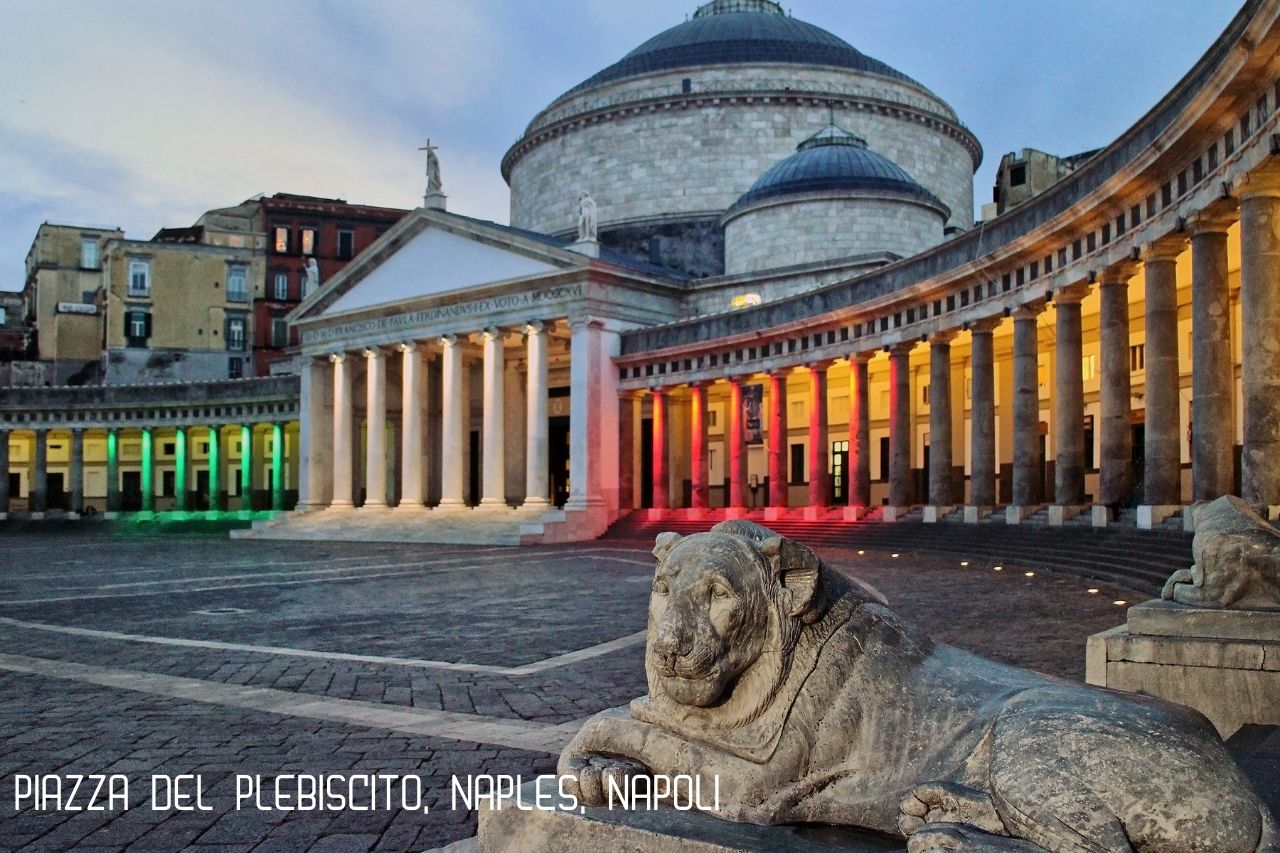
Nestled in the shadow of Mount Vesuvius, the city of Naples is centered on the stunning Bay of Naples and exudes a tranquil, rustic charm that is distinct from other Italian towns. With more ancient churches worldwide and the biggest Old Town in Europe, Naples is a city rich in history. Above all, it provides travelers with a deep and genuine Italian travel experience.
Nuovo Castle
- Address: Via Vittorio Emanuele III, 80133 Napoli NA, Italy
- Opening hours: 08:30 – 17:00
- Entrance fee: €6
Castel Nuovo, sometimes called Maschio Angioino (Angevin Keep), is a massive medieval Renaissance fortification close to the harbor of Naples. It was first constructed between 1279 and 1282. Its formidable look, which is made up of five spherical towers joined by impenetrable walls that are impossible for a tool to penetrate, impresses visitors from a distance.
Visitors will walk over an elegantly carved triumphal arch made of white marble between two watchtowers before entering the building. Within the Cappella Palatina, or Palatine Chapel, lies the Sala dell’Armeria, or Armory Hall, which has breathtaking historical murals that resemble earthly masterpieces created by Giotto. Also, you won’t want to miss the really exciting collection of Neapolitan artworks on the upper level of the castle, which dates from the 17th to the early 20th century.
Ovo Castle
- Address: Via Eldorado, 3, 80132 Napoli NA, Italy
- Opening hours: 09:00 – 20:00 (Monday – Saturday) | 09:00 – 18:00 (Sunday)
- Entrance fee: Free
Built by the Normans in the 12th century, the castle is currently situated on the historic island of Borgo Marinaro, where the Greeks originally lived in the 7th century BC. This location is also known as “Egg Castle” in reference to the myth of the Roman poet Virgil, who placed a magic egg beneath the fortress’s foundation and thought that if it was cracked, it would transform into a magic egg.
Even though Castel dell’Ovo is now utilized for events and temporary art exhibitions, a walk around its fortified stone walls provides visitors with a fascinating glimpse into the history of the site, which spans from its time as a splendid Roman villa to the Angevin royal home prior to Castel Nuovo’s construction as a jail.
National Archaeological Museum of Naples
- Address: Piazza Museo, 18/19, 80135 Napoli NA, Italy
- Opening hours: 09:00 – 19:30 (except Tuesday)
- Entrance fee: €22/adult & free for child under 18 years old
Because of its rich and distinctive history, the National Archaeological Museum of Naples is one of the most popular museums in Italy and one of the most significant worldwide within the cultural framework of Europe. After serving as a university headquarters under the Bourbons and a cavalry barracks initially, this location was formally designated as a museum toward the end of the 18th century. Discover one of the hubs of Western and Italian cultural history; be astounded by the Farnese Collection’s treasures; marvel at the magnificent mosaics and frescoes, the statues, and the priceless items that Herculaneum and Pompeii unearthed.
Sansevero Chapel Museum
- Address: Via Francesco de Sanctis, 19/21, 80134 Napoli NA, Italy
- Opening hours: 09:00 – 18:30 (except Tuesday)
- Entrance fee as follows
| Category | Fee (€) |
| Child up to 09 years old | Free |
| Young 10-25 years old | 7 |
| Adult | 10 |
| Audio guide | 3.5 |
The Sansevero Chapel Museum, which houses a shrouded figure of Christ in the chapel’s center, is a magnificent piece of architecture with an alluring mystery. The structure, which was sculpted in 1753, is well-known worldwide and is notable for its very light solid marble screen.
Numerous tales regarding Raimondo di Sangro’s renown as an alchemist emerged from this. Apart from the central Veiled Christ figure, the chapel boasts over two dozen additional sculptures that exemplify the spirit of Neapolitan Baroque, created by renowned artists like Francesco Queirolo, Antonio Corradini, and Francesco Celebrano.
Complesso Monumentale di Santa Chiara
- Address: 49/c, Via Santa Chiara, 49/C, 80134 Napoli NA, Italy
- Opening hours: 09:30 – 17:30 (Monday – Saturday) | 10:00 – 14:30 (Sunday)
- Entrance fee: €6/adult & €3.5/child 08-18 years old
Take a tour of the storied Complesso Monumentale di Santa Chiara, regarded as one of Naples, Italy’s top tourist destinations. The Basilica of Santa Chiara, 72 octagonal columns with elaborately tiled ceilings, monarchs’ graves, nuns’ monastery buildings, and an archeological museum are all located inside this medieval ecclesiastical complex.
The imposing Basilica, which features both Baroque and Angevin porticoes, is the Complesso Monumentale di Santa Chiara’s most notable feature. Due to its bombardment during World War II, the basilica has been rebuilt to resemble its original 14th-century design. The Chiostro di Santa Maria, which consists of 72 octagonal columns with elaborately tile-decorated themes of rural life, is another noteworthy feature. Also open to visitors is a tiny archeological museum including the unearthed remnants of a first-century spa facility.
Duomo di Napoli
- Address: Via Duomo, 147, 80138 Napoli NA, Italy
- Opening hours: 08:30 – 19:30
- Entrance fee: Free
Constructed in the 13th century, the Catholic Cattedrale di Santa Maria Assunta (also known as the Duomo di Napoli or the Cattedrale di San Gennaro) is situated in the center of Naples. One of the city’s most exquisite and striking structures is the Naples Cathedral. This is partially caused by the blend of many architectural styles. From authentic Gothic of the 14th century to Gothic of the 19th. Gazing onto a plaza flanked by porticos and two structures on the side of the cathedral, which are just as significant as the cathedral itself, is what you see in front of the church.
Verona
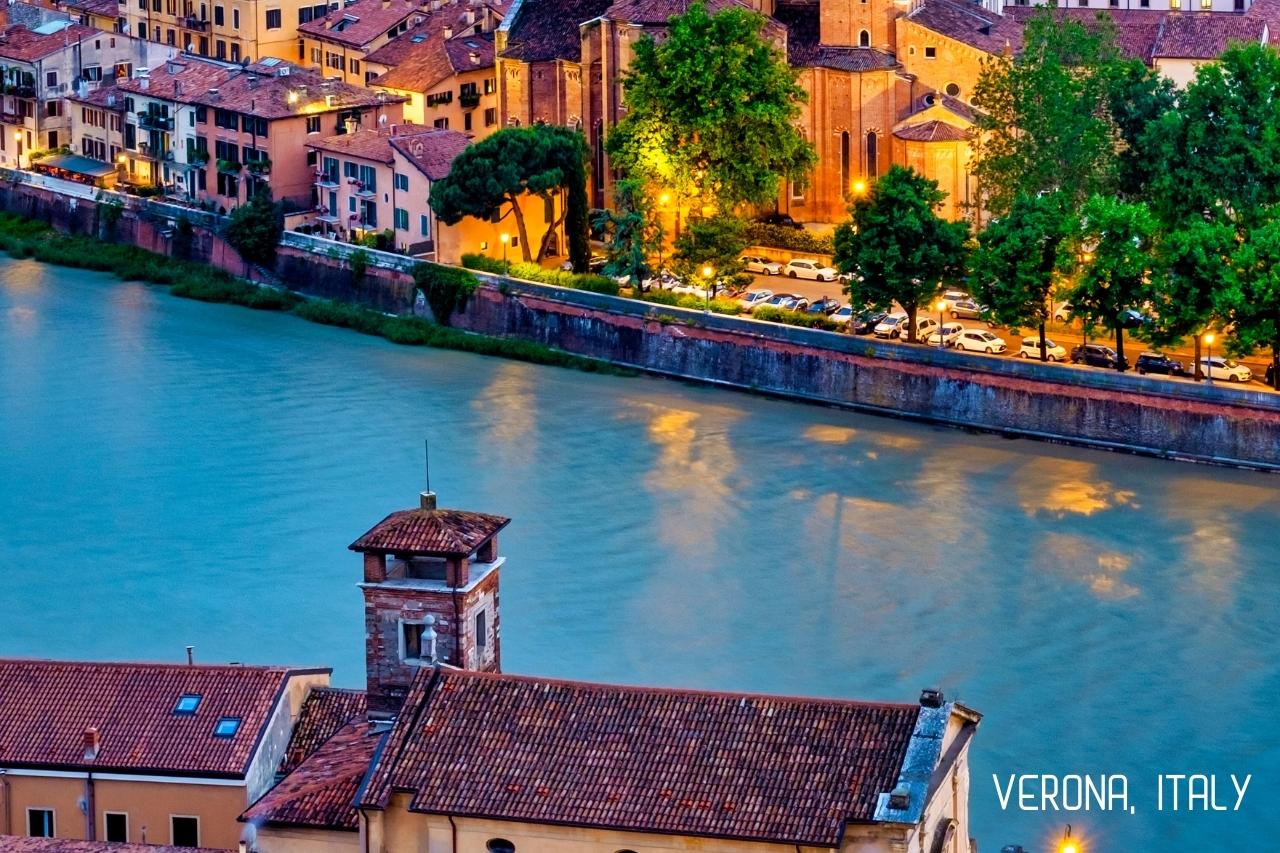
Verona, one of the most visited cities in Italy by visitors who are enthusiastic about art, architecture, opera, and well-known literature, is located in the S-shaped bend of the Adige River. The city, which was formerly a Roman colony in 89 BC, still contains some Roman antiquities, including an amphitheater, as well as many churches from the eleventh and twelfth centuries. Furthermore, you will be astounded by this significant Renaissance cultural hub’s magnificent structures and distinctively sturdy city walls in every architectural style.
Arena di Verona
- Address: P.za Bra, 1, 37121 Verona VR, Italy
- Opening hours: 09:00 – 19:00 (Tuesday – Sunday)
Constructed during the first part of the first century AD, the Verona arena has come to represent Scaliger and draws a significant influx of visitors each. Strong, straightforward, and functional design characterizes this magnificent amphitheater, which had an impact on Palladio and Sanmicheli’s work in the sixteenth century. The arena, which hosted gladiator bouts and hunts of rare and wild animals, included a cavern with bronze-structured stone stairs encircling its central sand-covered core. Lyrical music fans can be satisfied by the superb classical music and opera events held in the summer at Arena di Verona, which can accommodate up to 30,000 attendees.
Castelvecchio Museum
- Address: Corso Castelvecchio, 2, 37121 Verona VR, Italy
- Opening hours: 10:00 – 18:00 (except Monday)
- Entrance fee as follows
| Category | Fee (€) |
| Child up to 07 years old | Free |
| Child 08-14 years old | 1.1 |
| Student 14-30 years old | 4.95 |
| Adult | 6.6 |
| Senior over 60 years old | 4.95 |
The Castelvecchio Museum, which is situated in Northern Italy, presently has a collection of paintings, sculptures, statues, antique weaponry, pottery, goldware, miniatures, and several historic medieval bells from the Renaissance and modern eras up to the 18th century. From 1959 until 1973, Carlo Scarpa, an architect, restored the building and its exhibits, improving their look.
Today, guests will have the opportunity to view the enormous treasure trove, which consists of 29 exhibition rooms filled with artwork, sculptures, antiques, and weaponry; A specialized cabinet holding over 90,000 items, including medals and coins, 2,650 drawings, and 8,000 prints; the warehouse has about 200 pieces from anthropological collections, 300 weapons, 2,500 paintings, 500 sculptures and bronzes, and about 800 pieces of ornamental furniture and artwork.
Piazza delle Erbe
- Address: Piazza Erbe, 37121 Verona VR, Italy
- Opening hours: All day
- Entrance fee: Free
Perhaps the best place to take in a broad perspective of the stunning city of Verona and its landmarks—which were named UNESCO World Heritage Sites in 2000—is Erbe Square, located in the center of the city. a tasteful assemblage of historically significant, artistic, and architectural features that have been remarkably maintained.
When tourists arrive at the square, they are greeted by walls composed of historic structures from various centuries that have defined the city’s past. The focal point of the plaza is the fountain featuring the Roman figure of the Madonna of Verona; to the west are statues from Greek mythology, and scattered around is the historic 13th-century Tribune structure.
Juliet’s House
- Address: Via Cappello, 23, 37121 Verona VR, Italy
- Opening hours: 09:00 – 19:00 (except Monday)
- Entrance fee: €6
Juliet’s home, one of the most well-known locations in Verona, is visited by numerous couples from all over the globe as a beautiful example of a couple’s love. This property, which was formerly a medieval palace and was home to the Dal Cappello family in the 13th century, has undergone renovations and restorations and has been owned by several people throughout the years.
Numerous traditions state that Giulietta Capuleti and Romeo Montecchi lived in the mansion during the well-known Shakespearean tragedy. There is a bronze statue of Juliet in the yard now, and many feel that touching the statue’s right chest would result in a wonderful love. Above that is the balcony, where she spends her nights waiting for him, and a wall full of adorable love notes from really attractive couples.
Basilica di San Zeno Maggiore
- Address: Piazza San Zeno, 2, 37123 Verona VR, Italy
- Opening hours: 10:00 – 17:00 (Monday – Friday) | 09:30 – 18:00 (Sunday)
- Entrance fee: €4
In 807, the Basilica of San Zeno was dedicated. Since then, the remains of St. Zeno, the ninth bishop and patron saint of Verona, who converted the city to Christianity, have been kept in a shrine. Known as one of the most exquisite Romanesque churches in Italy, the structure remains mostly unchanged from its 1138 construction, with the exception of the wooden roof and the Gothic apse section.
The basilica is separated into three levels: the presbyteral church, which houses the renowned Triptych by Andrea Mantegna, the parish church, and the crypt, which has the bones of St. Zeno. The Basilica’s façade has rich hues and a beautiful appearance. The huge rose window known as the “Wheel of Fortune” and the exquisite ornaments instantly draw attention to their appearance and flawless architectural lines.


