
With the splendor of a caliph’s castle, the warmth of Mediterranean beaches under the sun, and the allure of flamenco dancers’ heels, Spain is a traveler’s paradise. These kinds of travel experiences encapsulate the essence of Spain, showcasing the nation’s captivating natural beauty, interesting history, and rich culture.
Madrid
Madrid, the capital of Spain and the third-largest city in the EU, is sometimes eclipsed by neighboring Spanish cities, such as Barcelona and Seville. Even while this vibrant capital city may not have Guadí masterpieces, its vitality is truly amazing. In addition to a fantastic variety of international cuisines, there are countless classic Spanish eateries. For people who enjoy art and history, there is no shortage of old structures and museums.
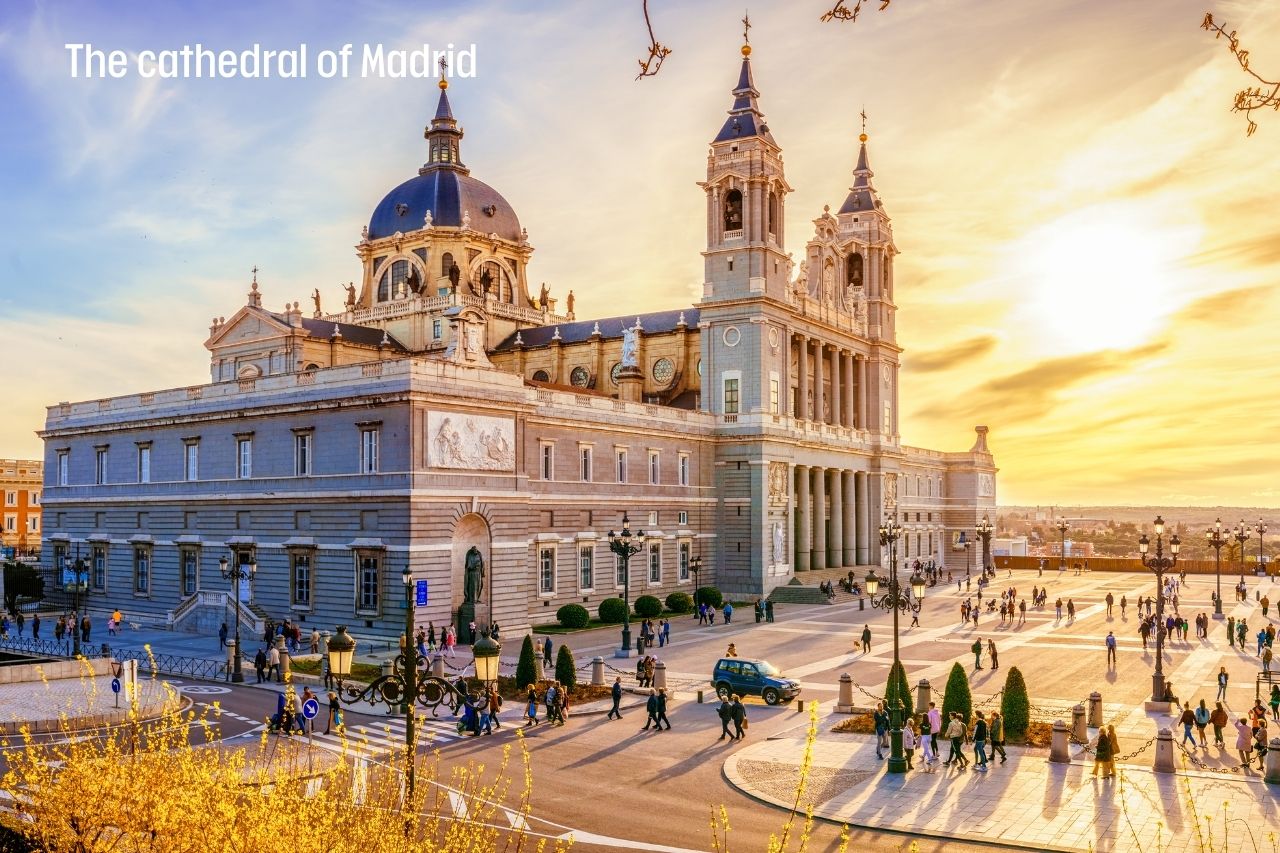
Plaza Mayor
- Address: Pl. Mayor, Centro, 28012 Madrid, Spain
- Opening hours: All day
- Entrance fee: Free
The Plaza Mayor, the most well-known of Madrid’s several elegant plazas, was the site of bullfights in 1619 when it was outside the city’s borders. Completed in the late 1700s, block-long rows of three-story residences around the rectangular cobblestone plaza on three sides. The buildings have magnificent slate spires on top, balconies enclosed with wrought-iron railings, and paintings throughout.
El Retiro Park
- Address: Retiro, 28009 Madrid, Spain
- Opening hours: 06:00 – 22:00
- Entrance fee: Free
Enjoy a thrilling segway ride or a historic tour of El Retiro Park, one of Madrid’s biggest and most well-known green areas. El Retiro Park, which is also conveniently located in the heart of Madrid, is the ideal place to escape the city. It has more than 125 hectares of green space, a 4.1-kilometer circle walk, and other attractions. The Crystal Palace, as well as sizable fountains, ancient statues, libraries, and cultural institutions, may all be seen on the circular walk. There are also a few stunning rose gardens and gardens with Andalusian influences that are worth spending a bit more time in.
Royal Palace of Madrid
- Address: C. de Bailén, s/n, Centro, 28071 Madrid, Spain
- Opening hours: 10:00 – 18:00
- Royal Palace of Madrid Entrance fee as follows
| Type of ticket | Category | Fee (€) |
| Self-Guided Visit | Child under 05 years old | Free |
| Child 05-16 years old/ Student up to 25 years old | 7.77 | |
| Adult | 14.77 | |
| Senior over 65 years old | 7.77 | |
| Visit to the Palace + Gallery | Child under 05 years old | Free |
| Child 05-16 years old/ Student up to 25 years old | 12.77 | |
| Adult | 24.77 | |
| Senior over 65 years old | 12.77 |
Get a glimpse into the royal life of the Spanish crown by visiting the majestic Royal Palace of Madrid, which is situated in the center of the city and features elaborate design and a rich history. The Royal Palace, which has over 3,418 rooms, greets every visitor with a stately staircase that leads past the coat of arms of the King of Spain. Savor the lavish design of each room as you travel from one to the next, from the high ceilings to the gold and crimson accents. The Royal Palace of Madrid, which dates back to 1735, is a symbol of national royal heritage even though the Royal Family no longer resides there. Nevertheless, official state ceremonies are still held there.
Prado Museum
- Address: C. de Ruiz de Alarcón, 23, Retiro, 28014 Madrid, Spain
- Opening hours: 10:00 – 20:00
- Museo del Prado Entrance fee as follows
| Type of ticket | Category | Fee (€) |
| General Ticket | Child under 18 years old/Student 18-25 years old | Free |
| Adult | 15 | |
| Senior over 65 years old | 7.5 | |
| Audio guide | + 5 | |
| Guided visit | + 10 | |
| General Ticket + Copy of the “Prado Guide” | 24 | |
| Art Walk Pass | 32 |
One of Madrid’s most visited tourist destinations is the Museo del Prado. Architect Juan de Villanueva created the 18th-century building that now contains one of the best art collections in the whole world. Navigation to the renowned museum is now easier thanks to a 2007 expansion. It is hard to view everything in a single visit, though, with over 7,000 pieces of art spanning culture and history from the 12th to the early 19th centuries. Focusing on the museum’s collection of Spanish painters, which is perhaps the greatest in the world and includes works by Goya, El Greco, da Ribera, and Velázquez, may be of interest to visitors.
Reina Sofia Museum
- Address: C. de Sta. Isabel, 52, Centro, 28012 Madrid, Spain
- Opening hours: 10:00 – 21:00 (except Tuesday)
- Reina Sofia Museum Entrance fee: €12
Situated in central Madrid at a short distance from the Prado institution, the Reina Sofia Museum is another well-known national Spanish art institution worth visiting. Named for the Queen Sofia of Spain, the Reina Sofia Museum features rooms full of Spanish art, notably pieces by prominent painters like Pablo Picasso and Salvador Dalí, including Picasso’s iconic Guernica. The majority of the artwork in the Reina Sofia is modern, but it also has over 21,000 works of 20th-century art, covering a wide range of political and social concerns and artistic movements including surrealism, cubism, and avant-garde.
Puer de Alcalá
- Address: Pl. de la Independencia, s/n, Retiro, 28001 Madrid, Spain
- Opening hours: All day
- Entrance fee: Free
Take a photo with the famous Puerta de Alcalá, a historic archway gate that served as the entry to Madrid for a long time together with four other archway gates that looked identical. Puerta de Alcalá, finished in 1778, is situated on the Plaza de la Independencia circle, in front of El Retiro Park. In the instance of the Puerta de Alcalá, it was toward the city of Alacá de Henares. Each archway is called for the nearest city to which it was directed. Admire the stunning three main arches and two side entrances of the neoclassical architecture.
Temple of Debod
- Address: C. de Ferraz, 1, Moncloa – Aravaca, 28008 Madrid, Spain
- Opening hours: 10:00 – 19:30 (except Monday)
- Entrance fee: Free
See the Templo of Debod, one of Madrid’s most well-known landmarks. Egypt gifted this stone temple, which was disassembled and rebuilt at one of Madrid’s most picturesque vantage points, rock by rock. Egypt gave Madrid the Templo of Debod as a token of appreciation for Spain’s assistance to the nation amid severe flooding during the building of the massive Aswan Dam. The Egyptian temple was moved to Madrid in 1968 and is believed to have been built in the second century BC. Nowadays, the temple is packed with visitors, especially in the evening when it’s the ideal time to see the city’s radiant sunset.
Palacio de Cristal
- Address: P.º de Cuba, 4, Retiro, 28009 Madrid, Spain
- Opening hours: 10:00 – 21:00 (Monday, Wednesday – Saturday) | 10:00 – 14:30 (Sunday)
- Palacio de Cristal Entrance fee: €12
Located in Retiro Park, the Palacio de Cristal, often known as The Crystal Palace, is a historically significant building that was constructed to display native flora and other items brought back from the Philippines while it was still a Spanish colony. Don’t miss it! The Crystal Palace, which dates to 1887, was regarded as one of Spain’s outstanding examples of cast-iron construction at the time. The London Crystal Palace in Hyde Park served as an inspiration for architect Ricardo Velázquez Bosco, who chose to build a replica of it in Madrid. These days, the building serves as a cultural pavilion in the park with a ton of rotating exhibitions that are interesting to look through.
Thyssen-Bornemisza Musuem
- Address: P.º del Prado, 8, Centro, 28014 Madrid, Spain
- Opening hours: 10:00 – 19:00
- Entrance fee as follows
| Category | Fee (€) |
| Child under 18 years old | Free |
| Adult | 13 |
| Senior over 65 years old | 9 |
See the numerous artistic movements represented in the 1,000 pieces of art of the Thyssen-Bornemisza Art Museum, including American, Russian constructivism, German expressionism, and many more. The museum bears the name of Baron Thyssen-Bornemisza, a German-Hungarian industrialist who started collecting art in the 1920s. His Spanish wife gave him the idea to create a museum in Madrid showcasing his collection. Unlike the Reina Sofia and the Prado, the Thyssen-Bornemisza is a fantastic collection of art since it has a variety of painters from other nations, whose styles include pop art, surrealism, futurism, and more!
Las Ventas Bullring
- Address: C. de Alcalá, 237, Salamanca, 28028 Madrid, Spain
- Opening hours: 10:00 – 18:00
- Entrance fee as follows
| Category | Fee (€) |
| Child 05-12 years old | 6 |
| Child 13-18 years old | 12 |
| Adult | 15 |
| Senior from 65 years old | 12 |
Among the largest bullfight rings in the world, Las Ventas can accommodate an incredible 23,798 spectators! See the Bullfighting Museum indoors, which houses the extensive history of this violent sport that originated in Roman times and gained popularity in Spain. See more of the amenities and areas within Las Ventas, such as the chapels dedicated to the Virgen de Guadalupe and the Virgen de la Paloma, by taking a tour. Explore the world-famous theaters and three cultural halls, and take in the cutting-edge medical treatment and fast care accessible in the bullfighters’ infirmary.
Barcelona
Barcelona, the energetic capital of Catalonia, is a gorgeous seaside city that proudly displays her beauty and sunny way of life. An enticing place with stunning nature, amazing architecture, and top-notch cultural attractions Of course, part of the attraction is the lovely Mediterranean weather.

Sagrada Família
- Address: C/ de Mallorca, 401, L’Eixample, 08013 Barcelona, Spain
- Opening hours: 09:00 – 18:00
- Entrance fee as follows
| Category | Fee (€) |
| Child under 11 years old | Free |
| Student | 24 |
| Adult under 30 years old | 24 |
| Adult | 26 |
| Senior | 21 |
Situated in the northern region of the city, the Basilica de la Sagrada Família commands a striking presence in its environs thanks to its eighteen delicate towers that rise sharply above all other structures. UNESCO has recognized this remarkable landmark, which is among the most unusual churches in Europe, as a World Heritage Site.
In 1883, the famous contemporary Catalan architect Antoni Gaudí received a commission to create a neo-Gothic church, which is today known as the Basilica. Nevertheless, he produced a quintessential example of his renowned surrealistic Art Nouveau building rather than adhering to the blueprints. He like to make changes and additions to the blueprints as work was completed, therefore he didn’t have any set concepts.
Despite Gaudí’s initial prediction of ten to fifteen years, the chapel was never finished in his lifetime. Based on Gaudí’s designs, a number of different architects have continued construction on the Basilica since 1926. Pope Benedict XVI dedicated the Basilica in 2010 when the main nave was finished, while work is still proceeding and anticipated to be finished by 2026.
Camp Nou
- Address: C/ d’Arístides Maillol, 12, Les Corts, 08028 Barcelona, Spain
- Opening hours: 09:30 – 19:00
Attentions: From June 2023, Camp Nou will undergo a major renovation, which means that the standard Camp Nou Experience will not be available. Instead you can book the Barcelona Immersive Tour & Museum. In the 2023/2024 season, FC Barcelona will temporarily play in the Olympic Stadium on Montjuïc. Ticket as follows
| Type of ticket | Category | Fee (€) |
| FC Barcelona Immersive Tour & Museum: Basic Admission | Child 04-10 years old | 21 |
| Student | 20 | |
| Adult | 28 | |
| Senior over 65 years old | 21 | |
| FC Barcelona Immersive Tour & Museum: Virtual Experience | Child 04-10 years old | 29 |
| Adult | 34 | |
| Senior over 65 years old | 29 |
For aficionados of architecture, Catalan Modernist buildings are a must-see; similarly, for those who love soccer, Camp Nou is a must-see. It served as one of the venues for the 1992 Summer Olympics in Barcelona. The stadium, with 99,354 seats, is the biggest in Europe and the second biggest globally.
Official FC Barcelona Guides, who are multilingual, lead tours of Camp Nou. Highlights of the stadium, including the playing field, the team’s changing room, the players’ tunnel, and the commentators’ boxes, are covered in the tours (which are offered in both Spanish and English).
A visit to the Barça Museum is included in guided tours as well. Trophy cases, images, and multimedia displays—which include clips of FC Barcelona’s championship goals—are on display in the Barça Museum.
Casa Batlló
- Address: Pg. de Gràcia, 43, L’Eixample, 08007 Barcelona, Spain
- Opening hours: 09:00 – 22:00
- Entrance fee as follows
| Category | Fee (€) |
| Child under 13 years old | Free |
| Junior 13-17 years old | 29 |
| Student | 29 |
| Adult | 35 |
| Senior from 65 years old | 32 |
Among Barcelona’s most distinctive Modernist structures is the UNESCO-listed Casa Batlló, another incredible work by Gaudí. The fanciful palace was created as a private home for Josep Batlló i Casanovas, a textile producer. This fantastical edifice resembles a castle from a weird fairy tale with its freely swinging curves and ornate exterior.
The majority of the design elements totally deviate from previous architectural precedents. The first story window frame is surrounded by swinging forms, some of which resemble cave openings and others which imply vegetation. Green, blue, and ochre-colored ornamental glazed ceramic tiles accentuate the flamboyance of the front. Like Casa Milà, it features a wave-shaped roof with several elaborately decorated chimneys.
Park Güell
- Address: Gràcia, 08024 Barcelona, Spain
- Opening hours: 09:30 – 19:30
- Entrance fee as follows
| Category | Fee (€) |
| Child 0-6 years old | Free |
| Child 07-12 years old | 7 |
| Adult | 10 |
| Senior over 65 years old | 7 |
This lush 19-hectare hillside park is a UNESCO World Heritage Site and is colorful, happy, and whimsical. Constructed between 1900 and 1914, the Park Güell consists of eight acres of immaculate woodlands (olive groves and pine forests) and twelve acres of groomed gardens with Surrealist architectural features designed by Antoni Gaudí. The garden area is dotted with magnificent fountains, viaducts, grottoes, a colonnaded hall, winding stairs, and semi-closed discussion chairs. These imaginative constructions are embellished with colorful mosaics created from broken pottery pieces.
La Pedrera
- Address: Pg. de Gràcia, 92, L’Eixample, 08008 Barcelona, Spain
- Opening hours: 09:00 – 20:30
- Entrance fee as follows
| Category | Fee (€) |
| Child under 07 years old | Free |
| Junior 07-17 years old | 12.5 |
| Student | 19 |
| Adult | 28 |
| Senior from 65 years old | 19 |
The most well-known secular structure designed by Antoni Gaudí is the UNESCO-listed Casa Milà, located in the Eixample quarter off the magnificent Passeig de Gràcia promenade. Casa Milà is sometimes referred to as “La Pedrera,” which means “The Stone Quarry” in colloquial terms since the structure is modeled after an open quarry.
Constructed between 1906 and 1912, this extravagant avant-garde residence resembles a sculpture rather than a useful structure. The natural stone facade features curved lines in every direction, complemented by rounded windows and plant-like metal balcony railings. Decorative chimneys accentuate the undulating contour of the roof. Strolling around the rooftop terrace allows visitors to get a close-up view of the oddly shaped chimneys covered with mosaics. Aside from providing breathtaking city views, the roof area offers tourists a distant glimpse of the Basílica de la Sagrada Família.
Ciutadella Park
- Address: Passeig de Picasso, 21, Ciutat Vella, 08003 Barcelona, Spain
- Opening hours: 10:00 – 22:30
- Entrance fee: Free
Barcelona’s most central park, Parc de la Ciutadella, was previously the sole public park in the city. It was constructed on the site of the old citadel. Situated in the northeastern region of Ciutat Vella, it spans an area of more than 17 hectares. It is a wonderful jewel that takes tourists away from the bustle and tension of Catalonia’s capital city and is one of Barcelona’s main green spaces.
It is incredibly attractive, enhanced by a number of features such as the Castillo de los Tres Dragones (Three Dragon Castle), which is now home to the Zoological Museum, and a stunning waterfall formed by a massive monument. Beautiful monuments, a lake, a greenhouse, woodland areas, the Barcelona Zoo, and manicured landscapes are all included inside the Park.
Montjuïc Castle
- Address: Ctra. de Montjuïc, 66, Sants-Montjuïc, 08038 Barcelona, Spain
- Opening hours: 10:00 – 18:00
- Entrance fee: €12 for general admission & €16 for general admission with guided tour
Perched 173 meters above the harbor, Montjuïc Castle offers breathtaking views of the city below. Although it is now a peaceful location, Barcelona nevertheless remembers this stronghold as a symbol of oppression and the difficulties the city has faced throughout its history. Perched atop Montjuic mountain, at an elevation of almost 170 meters, stands an old military stronghold. The castle commands a commanding vantage point over Barcelona and its port, providing breathtaking sweeping vistas. The enclosure, which was encircled by moats and consisted of four bastions with an average length of 150 meters each, was shaped like an irregular trapezoid.
Barcelona Cathedral
- Address: Pla de la Seu, s/n, Ciutat Vella, 08002 Barcelona, Spain
- Opening hours: 08:30 – 19:30
- Entrance fee: €14/adult | €6/child 03-11 years old | free/child under 03 years old
The Catedral de la Santa Cruz y Santa Eulalia (Cathedral of the Holy Cross and Saint Eulalia) is located in the middle of the Gothic Quarter on the Monte Tabor. With its elaborately carved exterior, this medieval cathedral is a masterpiece of Catalan Gothic architecture. Magnificent artwork may be seen in the sanctuary, such as the Bernat Martorell Altarpiece of the Transfiguration, other medieval altarpieces, and an amazing monstrance covered in jewels. The cathedral also has keystones from the fourteenth and fifteenth centuries, as well as an excellent Gothic choir. 13 live geese, representing Saint Eulalia’s martyrdom, are housed in the cathedral’s garden and cloister, a revelation that took many by surprise.
Magic Fountain of Montjuïc
- Address: Pl. de Carles Buïgas, Sants-Montjuïc, 08038 Barcelona, Spain
- Opening hours: All day
- Entrance fee: Free
Topping the list of things to do in Barcelona at night is witnessing the Magic Fountain of Montjuïc, at the Plaça d’Espanya in the Montjuïc area. Carles Buigas created the massive Art Deco fountain specifically for the 1929 Montjuïc International Exhibition. All ages are delighted by the musically coordinated light and fountain presentations at the Magic Fountain of Montjuïc. In the summer, the shows run Thursday through Sunday; in the off-season, they run Friday and Saturday. With musical interludes every 30 minutes, the nighttime performances go for many hours.
Picasso Museum
- Address: C/ de Montcada, 15-23, Ciutat Vella, 08003 Barcelona, Spain
- Opening hours: 10:00 – 19:00 (except Monday)
- Entrance fee as follows
| Category | Fee (€) |
| Child under 18 years old | Free |
| Young 18-25 years old | 7.5 |
| Adult | 14 |
| Senior from 65 years old | 7.5 |
Located in the Gothic Quarter on Calle de Montcada, the Picasso Museum was established in 1963 and is housed in five ancient palaces that were named after prominent 12th-century local families. The five palaces on Calle de Montcada are notable examples of Catalan Gothic architecture from the 13th and 14th centuries, and the street itself is designated as a Conjunto Monumental Histórico-Artístico (Historic-Artistic Monument). The museum’s collection mostly consists of pieces that Pablo Picasso produced during his formative years. With more than four thousand pieces, the collection showcases the artist’s early abilities. A comprehensive collection includes artwork from 1895 to Picasso’s Blue Period (1901–1904).
A few paintings from 1917 stand out in the collection as well. These include Arlequín, which depicts a harlequin figure (the model was a dancer from a Russian ballet company); El Paseo de Colón, which shows the Hotel Ranzini at number 22 on the Colón passageway; and Blanquita Suárez, which shows a well-known singer from the era. The Las Meninas art series, which features the Infanta Margarita María, is well worth seeing.
Valencia
The third-biggest city in Spain, Valencia is situated on the Mediterranean Sea on the Iberian Peninsula’s eastern coast. Larger Spanish towns are known for their vibrant, metropolitan atmospheres; in contrast, this port city is more relaxed and showcase its natural beauties. Both ultra-modern structures and the remains of a Roman colony from 100 BC may be found.
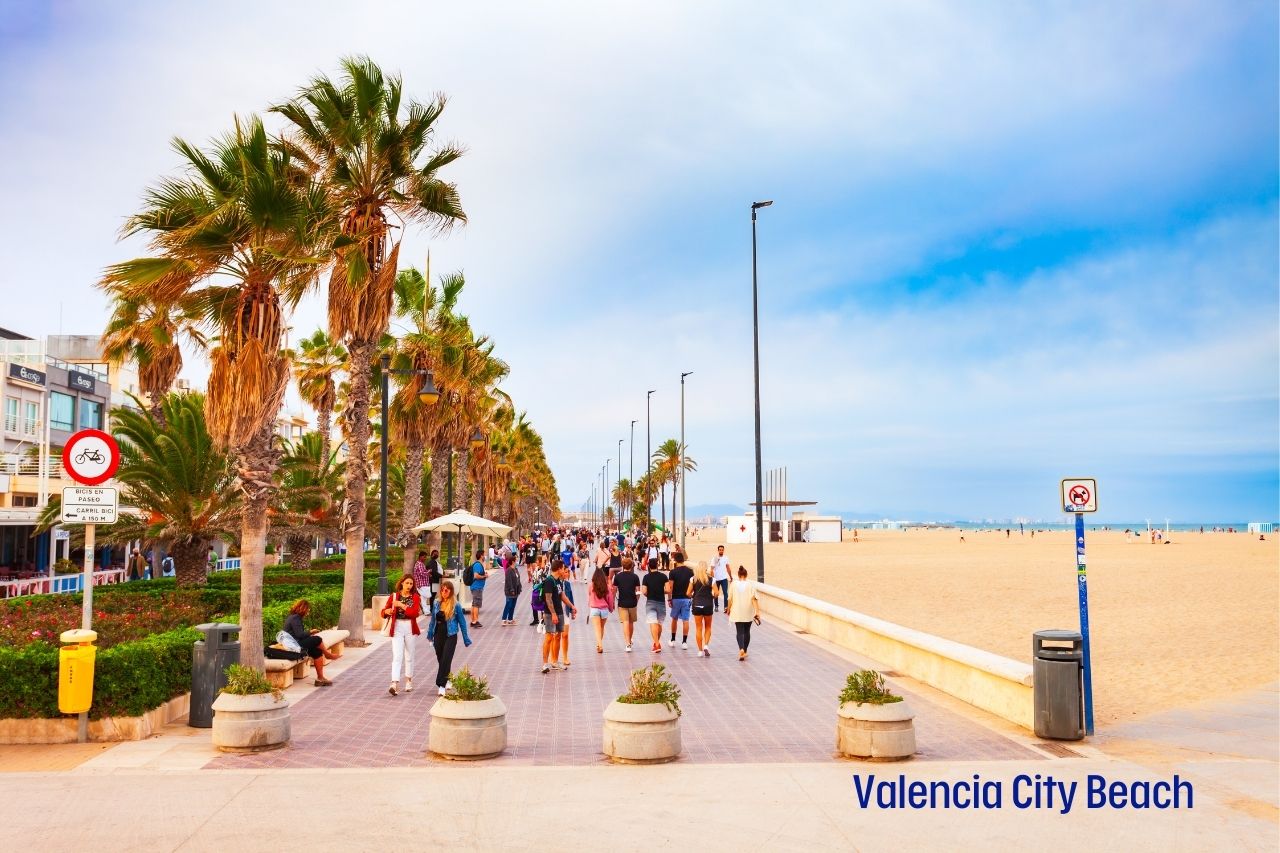
Ciudad de las Artes y las Ciencias
- Address: Av. del Professor López Piñero, 7, Quatre Carreres, 46013 València, Valencia, Spain
- Opening hours: 10:00 – 18:00 (Monday – Thursday) | 10:00 – 19:00 (Friday – Sunday)
This modern facility on Valencia’s outskirts is a great place to learn about the wonderful world of arts and sciences. One of the most striking venues for artistic and scientific displays in Europe is the Ciutat de les Arts i les Ciències, or The City of Arts and Sciences. The complex, which spans two kilometers along the Turia River, is home to some breathtaking instances of avant-garde architecture created by architects Félix Candela and Santiago Calatrava.
The six main areas of the Ciudad complex are: the Oceanogràfic, Europe’s largest aquarium; the Palau de les Arts opera house; the Umbracle landscaped area with shaded walkways; the Museu de les Ciències, an interactive museum with exhibits about science, the environment, and technology; and the Hemisfèric IMAX Cinema, which doubles as a planetarium and screens 3-D digital films.
L’Oceanogràfic
- Address: C/ d’Eduardo Primo Yúfera, 1B, Quatre Carreres, 46013 València, Valencia, Spain
- Opening hours: 10:00 – 18:00
- Entrance fee as follows
| Type of ticket | Category | Fee (€) |
| Oceanogràfic General Ticket | Child 04-12 years old | 25.75 |
| Adult | 34.7 | |
| Senior over 65 years old | 25.75 | |
| Oceanogràfic General Ticket + 4D Cinema | Child 04-12 years old | 28.75 |
| Adult | 37.7 | |
| Senior over 65 years old | 28.75 | |
| Digital audio guide | 4 | |
| Oceanogràfic General Ticket + El mar en tus manos | Child 04-12 years old | 32.75 |
| Adult | 41.7 | |
| Senior over 65 years old | 32.75 | |
| Oceanogràfic General Ticket + Backstage Tour | Child 06-12 years old | 37.75 |
| Adult | 46.7 | |
| Senior over 65 years old | 37.75 | |
| Oceanogràfic General Ticket + Arca del Mar | Child 04-12 years old | 30.75 |
| Adult | 39.7 | |
| Senior over 65 years old | 30.75 | |
| Oceanogràfic + Museu de les Ciències General Ticket | Child 04-12 years old | 27.55 |
| Adult | 36.5 | |
| Senior over 65 years old | 27.55 | |
| Oceanogràfic + Hemisfèric General Ticket | Child 04-12 years old | 27.35 |
| Adult | 36.3 | |
| Senior over 65 years old | 27.35 | |
| Oceanogràfic Ticket + Museu de les Ciències + General Hemisfèric | Child 04-12 years old | 33.85 |
| Adult | 42.8 | |
| Senior over 65 years old | 33.85 | |
| Museu de les Ciències General Ticket | Child 04-12 years old | 6.9 |
| Adult | 9 | |
| Senior over 65 years old | 6.9 | |
| Hemisfèric General Ticket | Child 04-12 years old | 6.7 |
| Adult | 8.7 | |
| Senior over 65 years old | 6.7 | |
| Museu de les Ciències + Hemisfèric General Ticket | Child 04-12 years old | 10.2 |
| Adult | 13.3 | |
| Senior over 65 years old | 10.2 |
The largest aquarium in Europe is housed in this remarkable structure, part of The City of Arts and Sciences, created by architect Félix Candela. In reality, it is a collection of many buildings, each one devoted to a major marine habitat or environment found on Earth: Wetlands, Temperate and Tropical, Oceans, Mediterranean, Antarctic, Arctic and Islands, and the Red Sea. 45,000 sea creatures, representing more than 500 different marine species, may be seen in nine towers that give the impression that you are looking underwater. The tunnel, where you walk with sharks swimming overhead and on both sides, is the most stunning of all.
Mercado Central de Valencia
- Address: Pl. Ciutat de Bruges, s/n, Ciutat Vella, 46001 València, Valencia, Spain
- Opening hours: 07:30 – 15:00 (except Sunday)
- Entrance fee: Free
Constructed in 1928, the Mercado Central (Central Market) is a large marketplace located in close proximity to La Lonja de la Seda. The region’s signature ornamental ceramics, called azulejos, are extensively used to embellish the Art Nouveau edifice. Hundreds of market stalls in the hall are occupied by sellers offering fresh produce, fruits, and other food items from Valencia and other parts of Spain.
Serranos Towers
- Address: Plaça dels Furs, s/n, Ciutat Vella, 46003 València, Spain
- Opening hours: 10:00 – 17:30
- Entrance fee: €2/adult & €1/child 07-12 years old
One of the two sections of the old city walls still standing is the twin stone Serranos Towers (Torres de Serranos), which were constructed in the fourteenth century as Valencia’s principal egress toward Barcelona and Northern Spain. Considered to be Europe’s biggest Gothic city entryway, they originally housed a triumphal arch and jail cells. Most walking, bike, and Segway tours of Valencia include a stop at the Serranos Towers, a well-liked picture opportunity and notable architectural landmark. Once reaching the towers, guests can explore the battlements or go to the summit for a view over the Barrio del Carmen neighborhood and the Turia riverbed.
Bioparc Valencia
- Address: Av. Pío Baroja, 3, Campanar, 46015 València, Valencia, Spain
- Opening hours: 10:00 – 18:00
- Entrance fee as follows
| Category | Fee (€) |
| Child under 04 years old | Free |
| Child 04-12 years old | 21 |
| Adult | 26.9 |
| Senior over 65 years old | 20.6 |
Valencia’s zoo encompasses 25 acres north of the park created by the diversion of the River Turia’s flow. The zoo is particularly well-known for its sizable collection of African species. The landscape was designed to keep animals in environments that were as similar to their natural habitats as possible. Viewing animals almost barrier-free in settings typical of the savannah, Madagascar, and equatorial Africa, the setting instantly gives you the impression that you have been transported to Africa.
Rather of being divided into distinct species, they live together as they would in their natural habitats. For example, lions, giraffes, antelopes, and rhinoceroses coexist peacefully on the savannah, just as they would in the wild. A thick tropical jungle is home to gorillas, and crocodiles and hippos chill themselves in the water.
Plaça de la Verge
- Address: Plaça de la Verge, 4, Ciutat Vella, 46001 València, Valencia, Spain
- Opening hours: All day
- Entrance fee: Free
Among Valencia’s many plazas, the Plaza de la Virgen, which faces the cathedral, is one of the most charming and ancient, having been around since the Roman era. Valencian artist Silvestre Edeta created the elegant Neptune fountain in the middle of the Plaza de la Virgen. Numerous notable structures around the area. Adjacent to the Catedral de València lies the Real Basílica de Nuestra Señora de los Desamparados, the first and most significant Baroque church in Valencia, while the Palace of the Generalitat is located across the plaza. Antonio Palomino created a stunning fresco on the church’s dome ceiling in 1701; it is regarded as a masterpiece of Spanish Baroque art.
Museu de les Ciències Príncipe Felipe
- Address: Ciudad de las Artes y de las Ciencias, Av. del Professor López Piñero, 7, 46013 Valencia, Spain
- Opening hours: 10:00 – 18:00 (Monday – Thursday) | 10:00 – 19:00 (Friday – Sunday)
The City of Arts and Sciences complex includes this museum. Santiago Calatrava created the structure, which resembles a whale skeleton. This museum is one of those that you are not allowed to touch. Everything is visually exhibited, with large text and pictures, experiments, and touch-and-feel buttons, all in line with the goal of teaching science via experience. The public may explore engaging scientific displays on the first level of the museum, including “Exploratorium,” “Furnishing the world, hand in hand with nature,” and “Children Space.”
The “The Legacy of Science” display is located on the second floor. A timeline derived from audiovisual content showcases the scientific journey and achievements of three exceptional Nobel laureates: Severo Ochoa, Jean Dausset, and Santiago Ramón y Cajal. The public may explore the stunning “Chromosome Forest” on the third level of the Museum, which is dedicated to the largest scientific achievement of modern times—the sequencing of human DNA. The exhibit spans over 2,600 square meters.
Llotja de la Seda
- Address: C/ de la Llotja, 2, Ciutat Vella, 46001 València, Valencia, Spain
- Opening hours: 10:00 – 18:30
- Entrance fee: €2
The Silk Exchange, also known as La Lonja de la Seda, is a well-known monument in Valencia and a representation of the city as well as a UNESCO World Heritage Site. The exchange, a wonder of Gothic architecture, was constructed in the fifteenth and sixteenth centuries as a center for the city’s commodities and silk dealers.
Constructed by renowned architect Pere Compte, the iconic structure consists of four parts: the tower, which was formerly a debtors’ jail; the Maritime Consulate (Consulado del Mar); the Trading Hall (Sala de Contratación), renowned for its towering vaults; and the courtyard, which is surrounded by fragrant orange trees. One of Valencia’s main attractions, the Silk Exchange is frequently included in walking and biking tours, as well as historical and architectural excursions.
Seville
You’ll be delighted as soon as you set foot on Seville’s charming cobblestone alleyways and wander along its palm-lined promenades. The views are just as breathtaking as the well-known flamenco dances and colorful festivals, and the enchanting atmosphere is created by elegant buildings, vintage street lighting, and horse-drawn carriages.
Plaza de España
- Address: Av. Isabel la Católica, 41004 Sevilla, Spain
- Opening hours: 08:00 – 22:00
- Entrance fee: Free
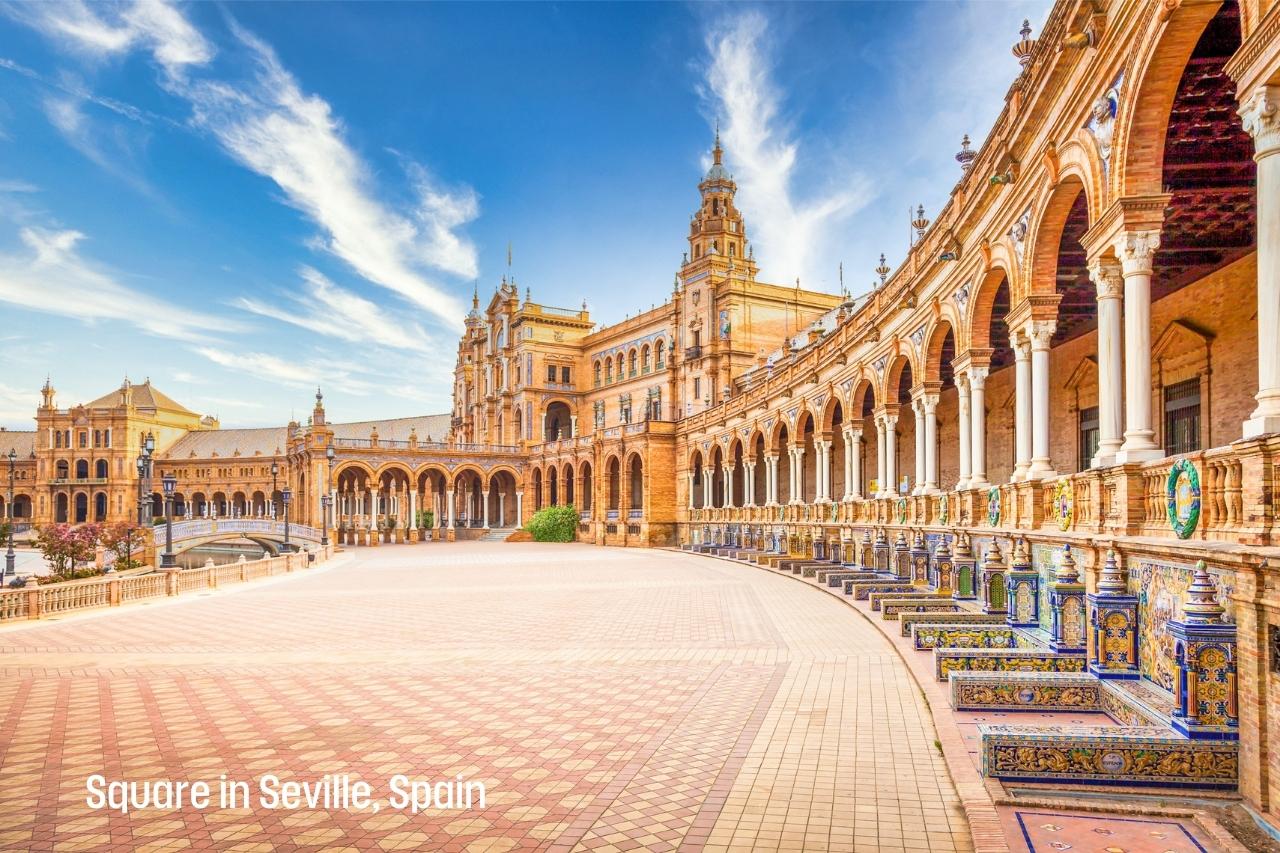
The Plaza de España, located inside Parque de María Luisa, astonishes guests with its size and magnificence. A Neo-Moorish edifice with balustraded balconies encircles the massive 50,000-square-meter plaza. The building wraps around the contour of the canal that runs through the square. There is a large fountain in the middle of the area, and there are four footbridges that span the serene canal. For an afternoon, visitors may hire a rowboat to explore the “Venice of Seville” or choose to take an equally romantic horse-drawn carriage trip around the park. Oftentimes, the Plaza de España hosts outdoor musical events and exhibitions. It’s a magnificent sight to see the old structure lit up at night behind the theater.
Alcázar of Sevilla
- Address: Patio de Banderas, s/n, Casco Antiguo, 41004 Sevilla, Spain
- Opening hours: 09:30 – 17:00
- Entrance fee: €13
Visitors are invited to enter The Real Alcázar, a fascinating location that is likely to pique their curiosity. The Caliph of Cordoba had this UNESCO World Heritage Site constructed as a stronghold in the tenth century.
Pedro I had the palace refurbished in the 14th century in the Mudéjar style, which is a fusion of Gothic and Arabic features, following the Christian Reconquista. The palace’s intricate decorations, which include patterned walls and ceilings and vibrant tile flooring known as azulejos, showcase the imaginative new architectural style.
Los Jardines del Alcázar, the exquisitely landscaped grounds, are also a must-see. Vibrant roses, aromatic orange trees, and lush palms abound throughout the grounds. The landscape is defined by patios, decorative pools, and cool fountains in the classic Andalusian style.
Torre del Oro
- Address: The Golden Tower, P.º de Cristóbal Colón, s/n, Casco Antiguo, 41001 Sevilla, Spain
- Opening hours: 09:30 – 18:30 (Monday – Friday) | 10:30 – 18:30 (Saturday – Sunday)
- Entrance fee as follows
| Category | Fee (€) |
| Child under 06 years old | Free |
| Child 06-14 years old | 1.5 |
| Adult | 3 |
| Senior from 65 years old | 1.5 |
This famous tower was originally a component of the city’s defense walls, having been constructed in 1220. Situated on the Guadalquivir River’s left bank, the 36-meter-tall monument was intended to serve as a lookout to ward off intruders. The tower was formerly coated in tiles of a golden tone, which accounts for its appellation, “Tower of Gold.” The Museo Marítimo de Sevilla (Naval Museum) is located in the Torre del Oro and features a collection of antique ship models, vintage navigation charts, and other exhibits pertaining to Spain’s maritime history. Additionally, the museum has a terrace with expansive views.
Giralda
- Address: Av. de la Constitución, s/n, Casco Antiguo, 41004 Sevilla, Spain
- Opening hours: 11:00 – 17:00 (Monday – Saturday) | 14:30 – 18:00 (Sunday)
- Entrance fee as follows
| Category | Fee (€) |
| Child up to 13 years old | Free |
| Student up to 25 years old | 6 |
| Adult | 12 |
| Senior over 65 years old | 6 |
| Audio guide | 5 |
| Audio guides in App format | 4 |
Minaret of the central mosque of Seville, which is today the , its construction began in 1184. Its name comes from the weathervane at the top of tower and which is known as the Giraldillo, which is in fact probably the well-known symbol of the city. It was originally called the Triumph of the Victorious Faith and was once the largest bronze sculpture of the European Renaissance. The Giralda has 24 bells, 18 of which turn around and 6 of which are clapper.
The tower, due to its complex history, comprises several perfectly interweaved sections, reflecting the cultural melting-pot in the city. For the construction of the Moorish part, as can be seen in its base, the remains of the buildings and stonework of Roman Hispalis were used, as they show various blocks with Latin epigraphs. The main body is square and the top part shows a polished style executed by Hernán Ruiz II.
Parque de María Luisa
- Address: P.º de las Delicias, s/n, 41013 Sevilla, Spain
- Opening hours: 08:00 – 00:00
- Entrance fee: Free
The Parque de María Luisa, with the Plaza de España in its heart, was the venue of the Exposición Iberoamericana in 1929. Designed for the Infanta María Luisa Fernanda de Borbón, this large green area was given to the city of Seville in 1893. Surrounded by Mediterranean pines, elms, orange trees, and exotic palms, the 34-hectare park is a verdant oasis next to the river. Vibrant flower gardens, shaded avenues, fountains in the Moorish style with multicolored ceramic tiles, and beautiful ponds are all part of the landscape.
Seville Cathedral
- Address: Av. de la Constitución, s/n, Casco Antiguo, 41004 Sevilla, Spain
- Opening hours: 10:45 – 17:00 (Monday – Saturday) | 14:30 – 18:30 (Sunday)
- Entrance fee as follows
| Type of ticket | Category | Fee (€) |
| Cathedral and Giralda (includes Church of El Salvador) with audio guide | Child up to 13 years old | 5 |
| Student 14-25 years old | 11 | |
| Adult | 17 | |
| Senior over 65 years old | 11 | |
| Cathedral and Giralda (Includes Church of El Salvador) | Child up to 13 years old | Free |
| Student 14-25 years old | 6 | |
| Adult | 6 | |
| Senior over 65 years old | 12 | |
| Guided tour to Cathedral and Giralda (Includes Salvador Church) | 20 | |
| Guided tour to the stained-glass windows (Includes a free visit to the Cathedral, Giralda and Salvador Church) | 20 | |
| Rooftops tour (includes admission to the Cathedral, Giralda and Salvador Church) | 20 |
In addition to being the third-largest church in the world, the Catedral de Sevilla in Sevilla, Spain, is a magnificent example of Gothic and Renaissance architecture and spans almost seven centuries of history. The Giralda bell tower was created when a bell and the Christian cross were placed to the once-existing minaret during the construction of the cathedral. After Bartolomé Morel cast an 11-foot (3.5-meter) high weather vane of a woman embodying the Christian faith, the bell tower was completed in 1568. The cathedral’s interior is striking due to its combination of Gothic, Renaissance, Baroque, and Plateresque architectural elements as well as its paintings, sculptures, and woodcarvings. Christopher Columbus’s grave from the 19th century is also housed in the cathedral.
Plaza de Toros de la Real Maestranza de Caballería de Sevilla
- Address: P.º de Cristóbal Colón, 12, Casco Antiguo, 41001 Sevilla, Spain
- Opening hours: 09:30 – 19:30
- Entrance fee as follows
| Category | Fee (€) |
| Child 07-11 years old | 3.5 |
| Youth 12-16 years old | 6 |
| Student 17-25 years old | 6 |
| Adult | 10 |
| Senior over 65 years old | 6 |
| Family 02 adults + 02 children | 25 |
| Family 02 adults + 03 children | 30 |
One of the best bullrings in Spain, the Real Maestranza de Caballería de Sevilla (Royal Bullring of Seville) can accommodate up to 12,500 spectators, making it one of the biggest.
Constructed in 1761, the Royal Bullring stands as a symbol of Seville. With its oval-shaped ring that sets it apart from other Spanish bullrings, the design is unmistakably Baroque, and its elegant arcaded seating offers much-needed shade on hot days. The Palco del Príncipe, a unique box inside the bullring, is only open to members of the Spanish royal family.
Within the Royal Bullring is a museum featuring authentic matador costumes, along with images and artwork pertaining to the dramatic sport of bullfighting. The prints by Francisco de Goya and Eugenio Lucas Velázquez’s work Cogida de Muerte de Pepe Hillo are the highlights. A trip to the museum offers an insight into the rich history of bullfighting.
Seville Museum of Fine Arts
- Address: Pl. del Museo, 9, Casco Antiguo, 41001 Sevilla, Spain
- Opening hours: 09:00 – 21:00 (except Monday)
- Entrance fee: Free
Housed in the beautiful Convento de la Merced Calzada, dating back to the 17th century, Seville is home to an outstanding Museum of Fine Arts. After the Prado in Madrid, this museum is said to hold the greatest collection of paintings in all of Spain. Artworks from the Gothic era to the 20th century are included in the collection. Particularly notable is the inclusion of pieces by Spanish painters from the 17th century. Masterworks by well-known Spanish artists, such as Alonso Cano, Diego Velázquez, Francisco Pacheco, and El Greco, will be on display for visitors.
Casa de Pilatos
- Address: Pl. de Pilatos, 1, Casco Antiguo, 41003 Sevilla, Spain
- Opening hours: 09:00 – 18:00
- Entrance fee as follows
| Type of ticket | Category | Fee (€) |
| Pilatos House Ground Floor | Child under 12 years old | Free |
| Adult | 12 | |
| Pilatos House Upper Floor | 6 |
The Andalusian Governors’ Palace, or Casa de Pilatos, is a recognized National Monument. Once the private residence of the noble Enríquez de Ribera family, which included the Dukes of Alcalá, this magnificent house was built.
The Casa de Pilatos, which dates from the 15th and 16th centuries, is said to be a copy of Pilate’s Jerusalem home. The home has a Mudéjar architectural variant with Baroque and Plateresque decorations from the Renaissance. The structure features a central courtyard with colorful ceramic tiles called azulejos and ancient statues, a characteristic feature of Andalusian architecture.
With its artesonado (coffered wood) ceiling and faience ornaments, the Salón Dorado (Golden Room) is a stunning space. Notable features also include the private chapel and the main staircase. All across the home is a collection of old Roman statues.
Granada
Granada is the soul of Andalusia, a place of breathtaking beauty at the foot of the Sierra Nevada Mountains. Granada’s scenic landscape, Spanish charm and historical sites draw travelers in droves. This mystical city was the capital of a Moorish kingdom from the 13th until the 15th centuries but today it has a modern vibe. The mix of old and new is what makes this such a dynamic city.
Alhambra
- Address: C. Real de la Alhambra, s/n, Centro, 18009 Granada, Spain
- Opening hours: 08:30 – 20:00
- Entrance fee as follows
| Type of ticket | Category | Fee (€) |
| Alhambra General Ticket | Child 03-11 years old | Free |
| Child 12-15 years old | 12.73 | |
| Adult | 19.09 | |
| Gardens, Generalife and Alcazaba | Child 03-11 years old | Free |
| Child 12-15 years old | 7.42 | |
| Adult | 10.61 | |
| Dobla de Oro General | Child 03-11 years old | Free |
| Adult | 27.3 | |
| Night visit to Gardens and Generalife | Child 03-11 years old | Free |
| Child 12-15 years old | 5.3 | |
| Adult | 7.42 | |
| Dobla de Oro at night | Child 03-11 years old | Free |
| Adult | 20.93 | |
| Alhambra Experiences | Child 03-11 years old | Free |
| Child 12-15 years old | 12.73 | |
| Adult | 19.09 |
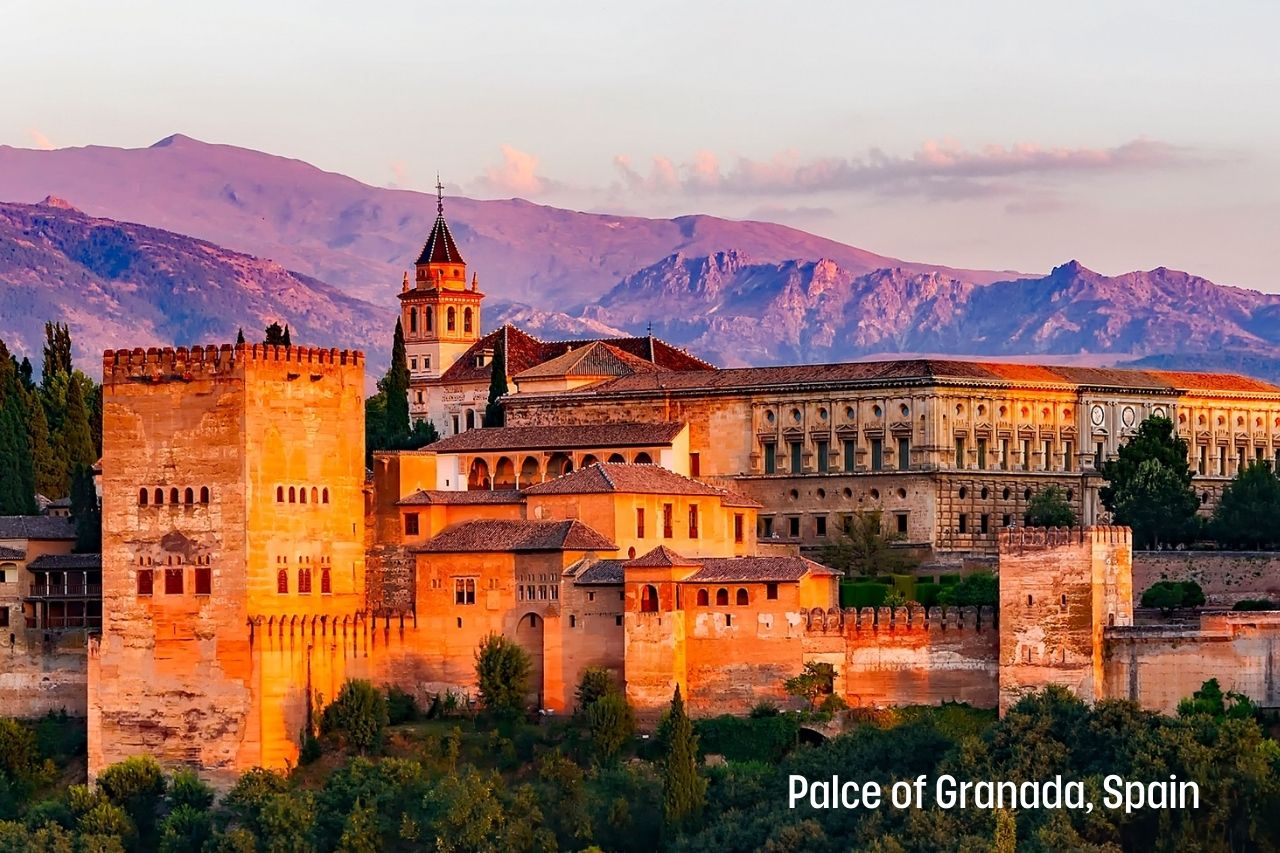
In the Spanish province of Andalusia, Granada is home to the magnificent Alhambra palace and castle complex. It is one of the most popular tourist destinations in Spain, having been constructed in the fourteenth century during the Nasrid dynasty. Originally built as a military stronghold, the Alhambra eventually housed the Nasrid Emirs and their court. The complex has a number of gardens, palaces, and courtyards that are all decorated with elaborate Islamic artwork and architectural details. Exploring the many palaces, gardens, and courtyards can take visitors hours, as they take in the exquisite features and breathtaking vistas of the surrounding area. At the Alhambra, there is something for everyone to discover, from the serene Generalife gardens to the elaborate Nasrid Palaces.
Mirador de San Nicolás
- Address: Plaza Mirador de San Nicolás, 2, Albaicín, 18010 Granada, Spain
- Opening hours: All day
- Entrance fee: Free
Getting lost in the hillside area of the Albaicín, a UNESCO-listed World Heritage Site, is one of the most charming things to do in Granada. Once encircled by protective walls, Granada’s old Arabic neighborhood, the Albaicín, has managed to preserve its true Moorish identity with its charming narrow alleyways and plain whitewashed dwellings. The terrace in front of the 16th-century Church of San Nicolas, located in the center of the Albaicín neighborhood, is home to the most breathtaking vantage point in the Albaicín. The Sierra Nevada Mountains and the Alhambra castles are seen in this often painted picture.
Royal Chapel of Granada
- Address: Calle Oficios, s/n, 18001 Granada, Spain
- Opening hours: 10:00 – 18:30
- Entrance fee: €5/adult & free for child up to 12 years old
The Capilla Real de Granada, which holds the royal graves, is the ideal place to witness the magnificence of Spain’s Catholic monarchs. Constructed in the Late Gothic style between 1506 and 1521, this remarkable 47-meter-tall domed chapel has its own entrance yet is connected to the Catedral Santa María de la Encarnación.
The interior has exquisite 16th-century stained-glass windows and seven big paintings by Alonso Cano. The ornately adorned royal graves are enclosed by an intricately wrought grille by Bartolomé de Jaén. Domenico Fancelli, a Florence-based artist, built a monument made of Carrara marble that houses the tomb of Ferdinand and Isabella to the right.
Sarcophagi of other princes and monarchs are kept in the crypt. The tombs of Bartolome Ordóñez’s Joan the Mad and Philip the Handsome are located to the left. Diego de Siloé’s enormous, beautifully carved retablo behind the royal graves holds figures of the Catholic Monarchs.
The Sacristy-Museum, which houses a wealth of artwork including Hans Memling’s Descent from the Cross, Rogier van der Weyden’s Pietà, and Botticelli’s Christ on the Mount of Olives, is a highlight of the Capilla Real. The collection also includes a prayer book that belonged to the Catholic Monarchs, King Ferdinand’s sword, Queen Isabella’s crown, and polychrome wood sculptures of the monarchs in prayer by Felipe Vigarny.
Granada Cathedral
- Address: C. Gran Vía de Colón, 5, Centro, 18001 Granada, Spain
- Opening hours: 10:00 – 18:15 (Monday – Saturday) | 15:00 – 18:15 (Sunday)
- Entrance fee: €5/adult and free for child under 12 years old
Perhaps Spain’s best Renaissance church is the Santa María de la Encarnación Cathedral in Granada. Queen Isabella erected the church as a memorial to Christian Spain’s triumph over the Moors. Overlooking the main gateway is a huge relief by José Risueño from the 16th century’s west façade. Moreover, the cathedral’s northwest side is lavishly adorned with elaborate sculptures. Bronze Apostles and Catholic Monarchs’ sculptures are set atop the pillars supporting the entry arch.
Through the main entryway, guests enter the cathedral and are greeted with the interior’s Renaissance beauty, which includes a large nave and richly decorated chapels. The Capilla Mayor (Main Chapel), which is exquisitely ornamented, is a prime example of the harmonious Renaissance architecture that was developed in Granada in the sixteenth century.
A collection of religious artwork, including paintings, sculptures, tapestries, and holy artifacts, is on show at the cathedral’s Sala Exposición (museum). The enormous silver monstrance and the Flemish tapestries are the highlights.
Plaza Isabel La Católica
- Address: Centro, 18009 Granada, Spain
- Opening hours: All day
- Entrance fee: Free
Plaza de Isabel la Católica is situated where the Gran Via de Colón and Reyes Catolicos Street converge. Take a brief look at the marble monument, which is framed against the glistening façade of the Banco de Santander (another contentious example of capitalism salvaje a la andaluza), as you dash across the Gran Via. It was created in Rome as a sculpture celebrating the 1892 Fourth Centennial of the Discovery of America, and it depicts Queen Isabel granting Columbus permission to travel. The Granadino people jokingly refer to it as La Plaza de Colon-Columbus Square, despite the actual name being Plaza Isabel la Catolica.
Majorca
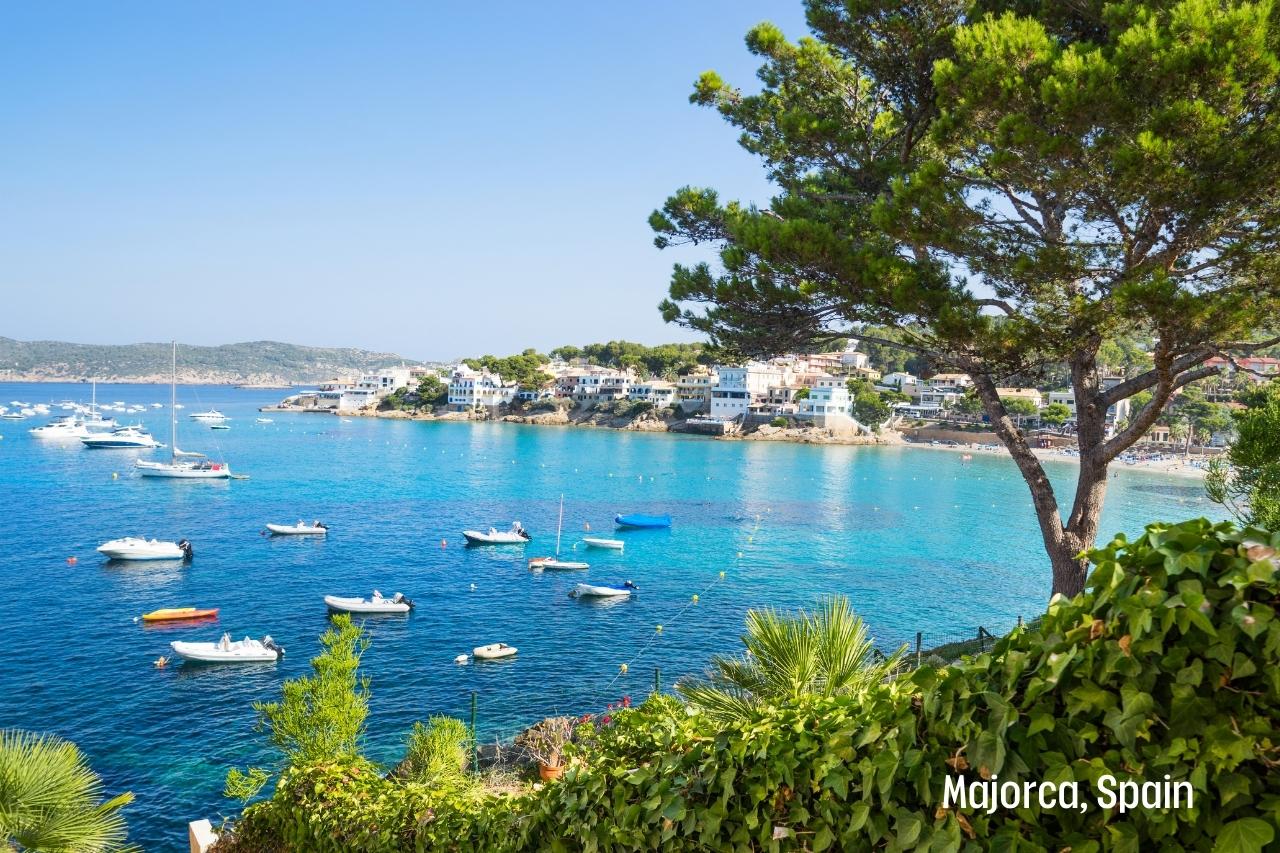
One of the most well-liked Mediterranean holiday destinations in Spain is Mallorca. Some of the most breathtaking natural landscapes in all of Europe may be found in this lush and lovely nation. Mallorca offers an abundance of outdoor activities, including breathtaking beach resorts, limestone mountains, and enigmatic coves and caverns.
Catedral-Basílica de Santa María de Mallorca
- Address: Plaça de la Seu, s/n, Centre, 07001 Palma, Illes Balears, Spain
- Opening hours: 10:00 – 17:15 (Monday – Friday) & 10:00 – 14:15 (Saturday)
- Entrance fee as follows
| Type of ticket | Category | Fee (€) |
| Mallorca Cathedral + Museum of Sacred Art | Child under 09 years old | Free |
| Adult | 10 | |
| Senior over 65 years old | 8 | |
| Mallorca Cathedral + Terraces + MASM | 25 | |
| Mallorca cathedral with guided tour | 30 |
The imposing Palma Cathedral, also known as La Seu, dominates the Mallorca coastline. Following his conquest of the Balearic Islands in 1229, King James I (Jaume 1) started transforming a mosque from the Moorish era in modern-day Palma de Mallorca (Majorca) into a magnificent cathedral in the Catalan Gothic style with a view of the Mediterranean. The most famous sight in the city, the golden sandstone façade, took almost 400 years to construct. Though it is rather spectacular during the day, the building is much more stunning at night when floodlights shine on the sandstone façade and the stained-glass windows are lighted from within. Take a nighttime walking tour of the city to see it.
Palma Aquarium
- Address: Carrer de Manuela de los Herreros, 21, Platja de Palma, 07610 Palma, Illes Balears, Spain
- Opening hours: 10:00 – 15:30 (Monday – Friday) | 10:00 – 17:30 (Saturday – Sunday)
- Palma Aquarium Entrance fee as follows
| Type of ticket | Category | Fee (€) |
| General ticket + 3D Cinema Aquadome | Baby 0-2 years old | Free |
| Child 03-12 years old | 18 | |
| Adult | 28.5 | |
| Senior from 60 years old | 24.5 | |
| General ticket + Shark Vision Boat + 3D Cinema Aquadome | Baby 0-2 years old | Free |
| Child 03-12 years old | 24 | |
| Adult | 33 | |
| Senior from 60 years old | 29 | |
| General ticket + Shark Vision Boat + Menu + 3D Cinema Aquadome | Baby 0-2 years old | Free |
| Child 03-12 years old | 34 | |
| Adult | 48 | |
| Senior from 60 years old | 45 |
One of the biggest aquariums in Europe is Palma Aquarium, which spans a record 41 thousand square meters and features 55 themed tanks housing over 700 different species of Mediterranean fish. It is strongly advised that you visit the Palma de Mallorca Aquarium in order to learn more about the fascinating underwater environment of the Mediterranean. Over the course of the approximately four-hour journey, guests will visit five themed zones. There are 24 aquariums featuring various species of plants and animals in the Mediterranean Sea area, along with a small outdoor aquarium where visitors may pet sea cucumbers and urchins. Species from the Indian, Atlantic, and Pacific seas live in the 25 tropical marine aquariums.
Castell de Bellver
- Address: Carrer Camilo José Cela, s/n, Ponent, 07014 Palma, Illes Balears, Spain
- Opening hours: 10:00 – 18:00 (except Monday)
- Entrance fee: €4
This exquisitely maintained 14th-century royal stronghold boasts delightful pine forests, a fascinating museum, and breathtaking views of Palma Bay. It is difficult to realize that this well-maintained castle has been there for over 700 years when you look up at it. Constructed by Pere Salva, the architect of the Almudaina Palace, and started by Jaume II in 1300, this Spanish castle is the only one that is completely spherical. A central courtyard is surrounded by three sizable towers that are connected to a freestanding keep by an arch. The courtyard itself is two stories, with rib-vaulting and Gothic arches on the top level and semicircular arches with a flat roof on the bottom floor.
The castle served as a jail for several centuries, housing the sons and widow of King Jaume III for the most of their life. These days, it houses Palma’s municipal history museum, which uses artifacts from the Talaiotic, Roman, Arab, and Spanish eras to chronicle the evolution of the city.
Cuevas del Drach
- Address: Ctra. de les Coves, s/n, 07680 Porto Cristo, Illes Balears, Spain
- Opening hours: 10:30 – 15:30
- Entrance fee as follows
| Type of ticket | Category | Fee (€) |
| Online Price | Baby 0-2 years old | Free |
| Child 03-12 years old | 9.5 | |
| Adult | 16.5 | |
| Offline Price | Baby 0-2 years old | Free |
| Child 03-12 years old | 10.5 | |
| Adult | 17.5 |
The Black Cave, the White Cave, the Cave of Luis Salvador, and the Cave of the French are the four breathtaking natural wonders that make up the Caves of Drach. They are all tied to one another and play a significant role in the region’s history. Gradually you will realize that the caverns are exquisitely preserved and lit by the Catalan engineer Carles Buïgas, dubbed the magician of light. His use of light and shadow enhances the caverns’ natural beauty and gives them a tremendous sense of atmosphere, making them perfect for a leisurely boat journey to commemorate a very important occasion. You will learn about the cave’s and its waters’ depths while the boat rocks softly. Observing the colors as they shift will give you a sense of their depth. A depth of around three meters is indicated by green, eight meters by blue, and merely one by white.


